Blavatsky’s Tower
Set and Costume Design (Hypothetical Design Project)

- Synopsis -
On the twenty-fifth floor of a monstrous tower block Hector Blavatsky, an architect, visionary, and patriarch, dominates his family with God-like authority. Fearful of being tainted by the ‘the crushed’ society living below, the Blavatskys are in full retreat from the world. But Hector is dying, and when an outsider arrives in their miniature universe the family must finally consider the risks of being tainted by the apparent crushed entering their ecosystem.
Roland
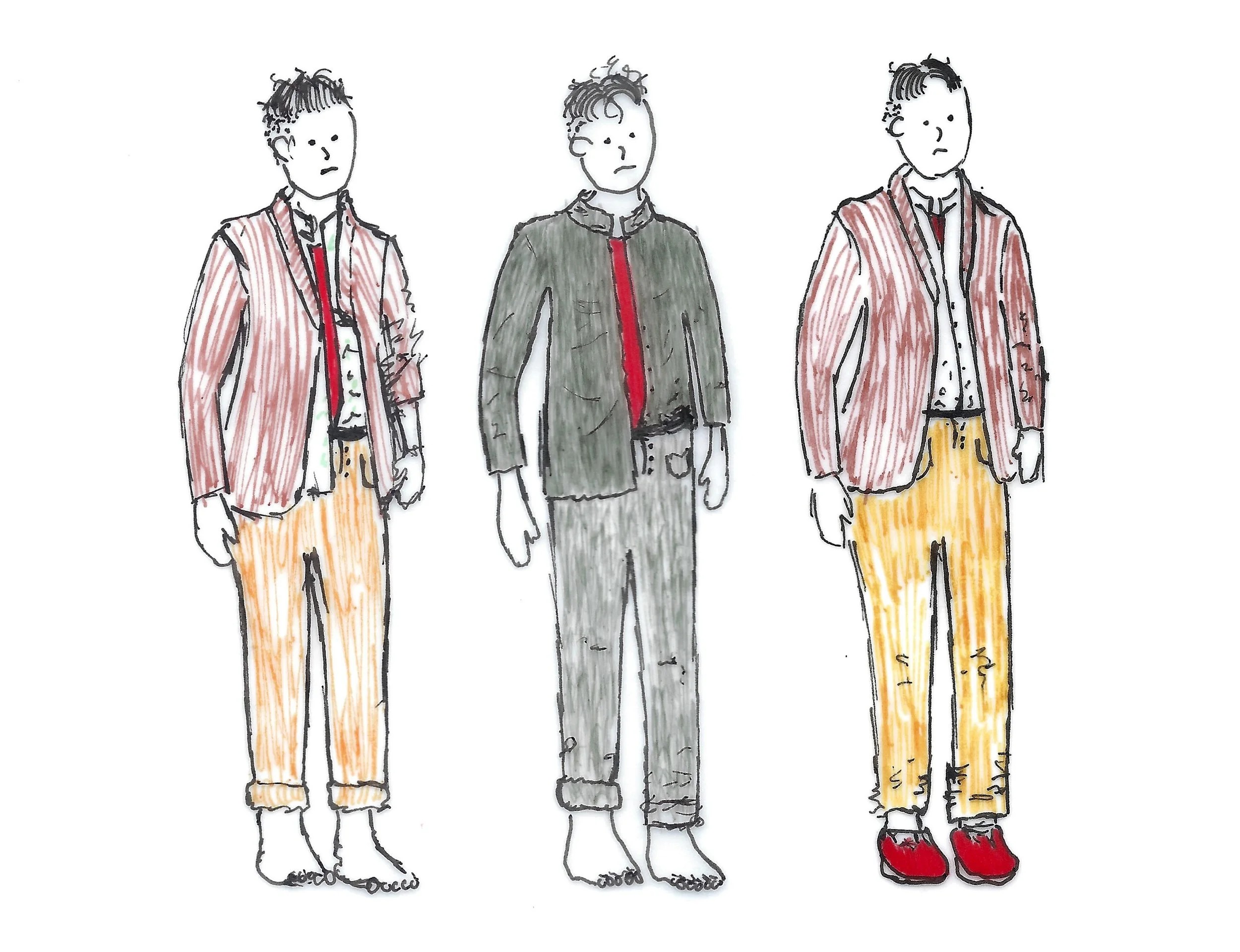
Roland is the son of Mr Blavatsky, He is the ignorant from the outside world having never left their home. Rolands mentions connotations of hell and the devil throuout the script. Roland is not aware of the norm of the outside world, and therefore is guessing wrongly at what he thinks is expexted.
I designed three different versiond of Rolands costume as the script dictates a costume change at two different points. Rolands costumes all have some or all of; a corduroy jacket covering a shirt, with a red top underneath - red as a reference to the constant mention of hell related entities. He also wears corduroy trousers. He changes his look depending on various factors and conversations throughout the play.
Mr Hector Blavatsky
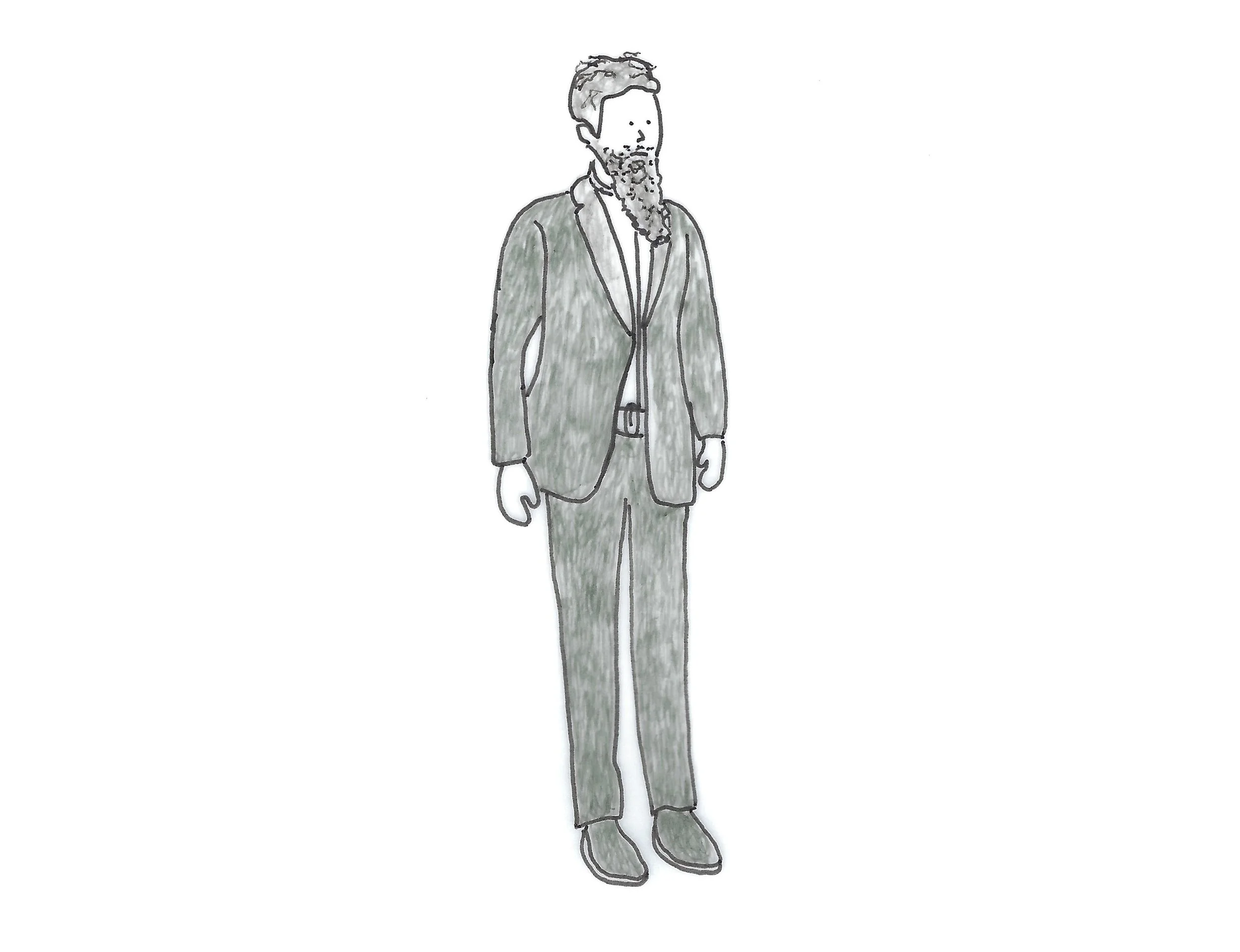
Mr Blavatsky is the father of the three children in the play, and is the architect that designed the tower where the play is set. He lives in the tower to prove that it is good architecture despite what on-lookers say. Mr Blavatsky also attempts to keep his children within the confines of the tower to avoid having them tainted by the “crushed” who live below.
I designed Mr Blavatsky’s costume to reflect his aloof character whilst playing on, and emphasising, the cliché of an architect’s typical dress; Blavatsky wears an all black suit with black shoes as well as having a black beard and black hair.
Ingrid
Ingrid is the younger daughter of Mr Blavatsky. Ingrid, like Roland, abides by her fathers wishes and does not leave the confines of their home until the very end of the play, but she is very much drawn to the idea of leaving. There is a suggestion of a potential romantic connection between Ingrid and The Doctor who ultimately upsets the regular rigmarole of their family function.
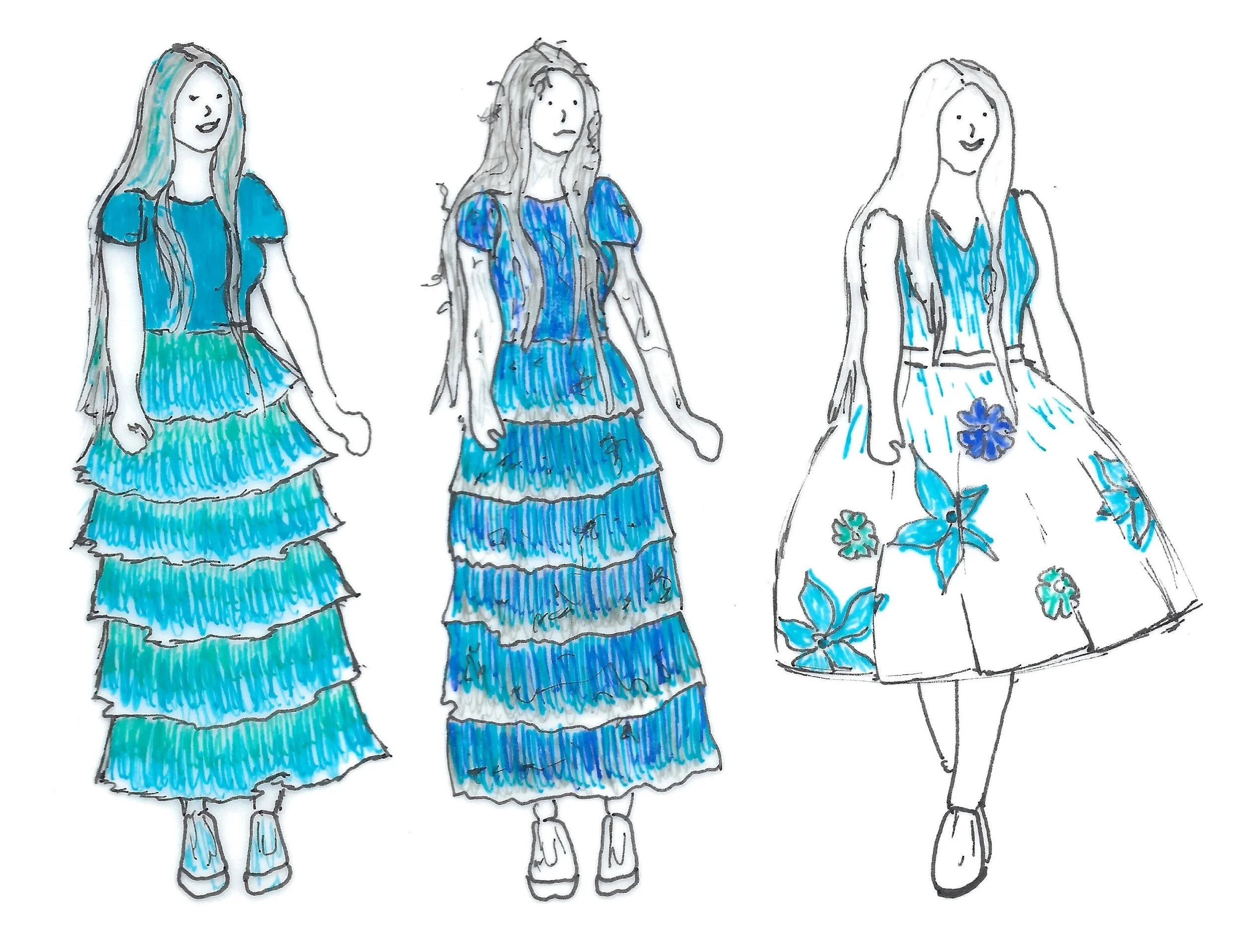
Ingrids costume, like Roland’s, is designed in three different versions. The first, a flamenco inspired dress reflects her non-conformative and curious character. The second is a dischevelled and soakeing wet version of the first costume. Ingrids third costume is a brighter more hopefull and happy dress for when she ultimately leaves with The Doctor.
Audrey
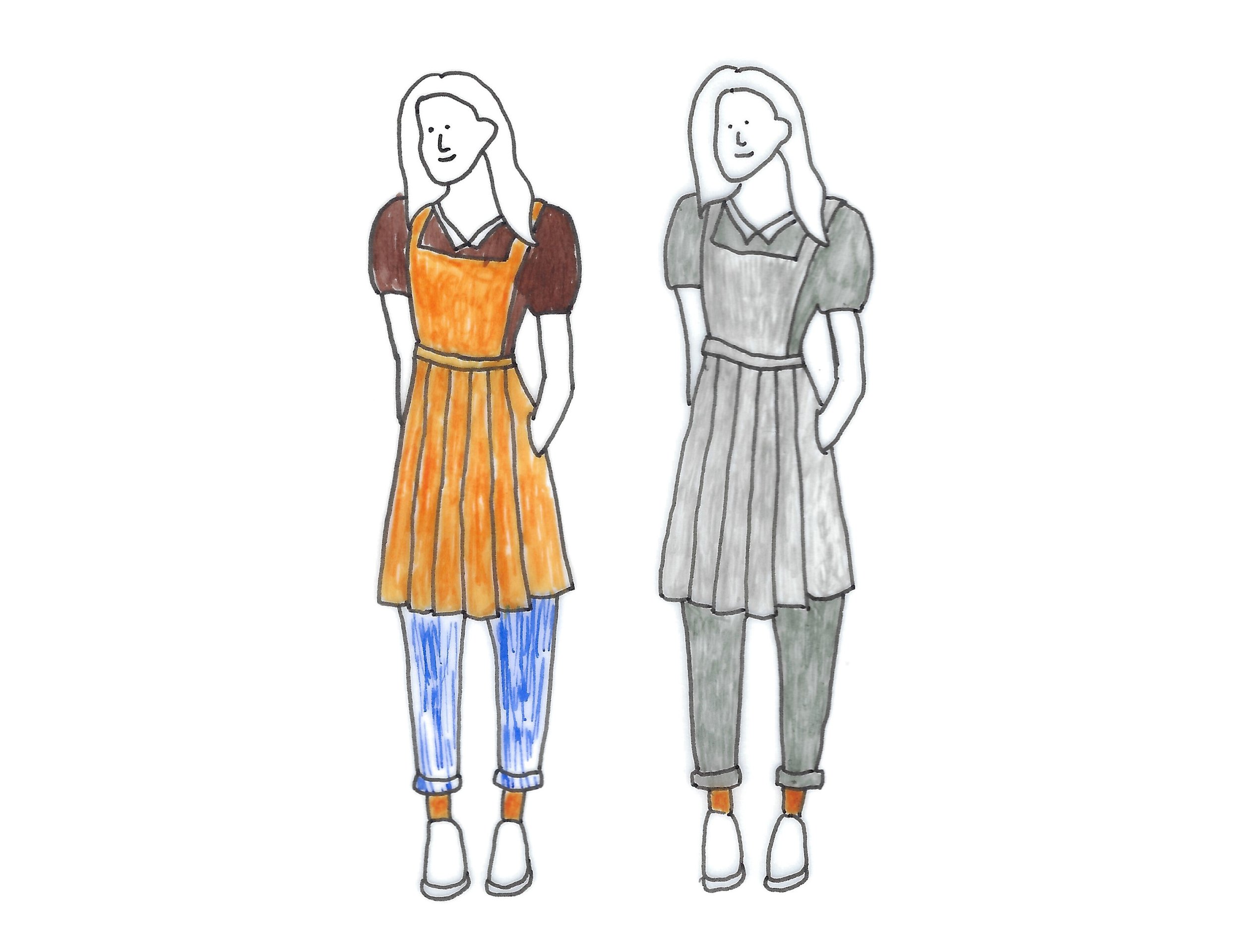
Audrey is the eldest daughter of Mr Blavatsky. Audrey is the only member of the family who regularly leaves. However, similarly to Roland she has little awareness of the outside world which is reflected in her costume.
I designed Audrey’s costume to be mismatched and slightly ill-fitting to reflect her separation from every day society. However, she wears a dress with an apron-esque element indicating that she works as indicated in the script. Her costume is designed to look as if it were clothes for someone younger than herself, suggesting that she might be attached to a dress sense learnt at a younger age.
The Doctor Tim Dunn
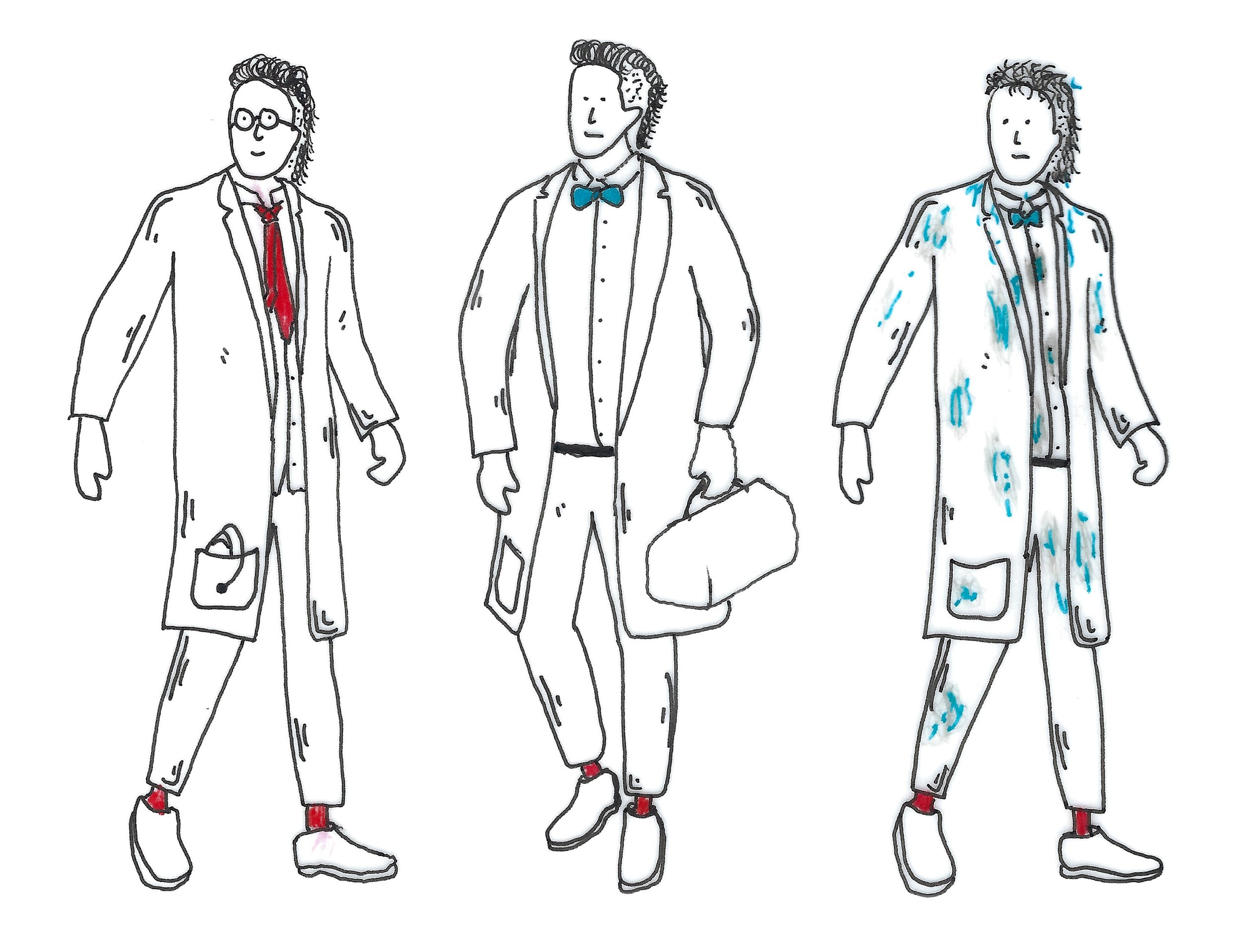
The Doctor enters the story when he is called to see to the dying Mr Blavatsky. He is the only member of the outsude world to enter the Blavatsky home, and the family are wary of this dispuption. The script hints that he could be linked to the afforementioned hell that Roland refers to throughout the play. Aptly, Roland is not fully convinced that The Doctor is an actual doctor.
The Doctors initial costume hints at a doctors outfit with a stethascope in his pocket which is referenced in the script. He also has red socks and a red tie, again, referring to the repeated hell references in the script. The Doctors coat also has cartoon-like markings playing on his potential fakeness or etherial otherworldly character. The second costume gets rid of the red tie and is replaced with a blue bowtie progressing the costume in the direction of a connection with the blue of Ingrids costume and inturn Ingrid herself. The second costume also is altered based on what The Doctor percieved to be a more convincing doctor outfit acording to Roland. The third drawing shows the same costume after it has come in contact with water. I have theorised the use of a temperature sensitive colour changing material that when brought into contact with cold water, it turns blue, climaxing the Doctors connection with Ingrid for the final part of the play when they leave together.