

Garden Chair
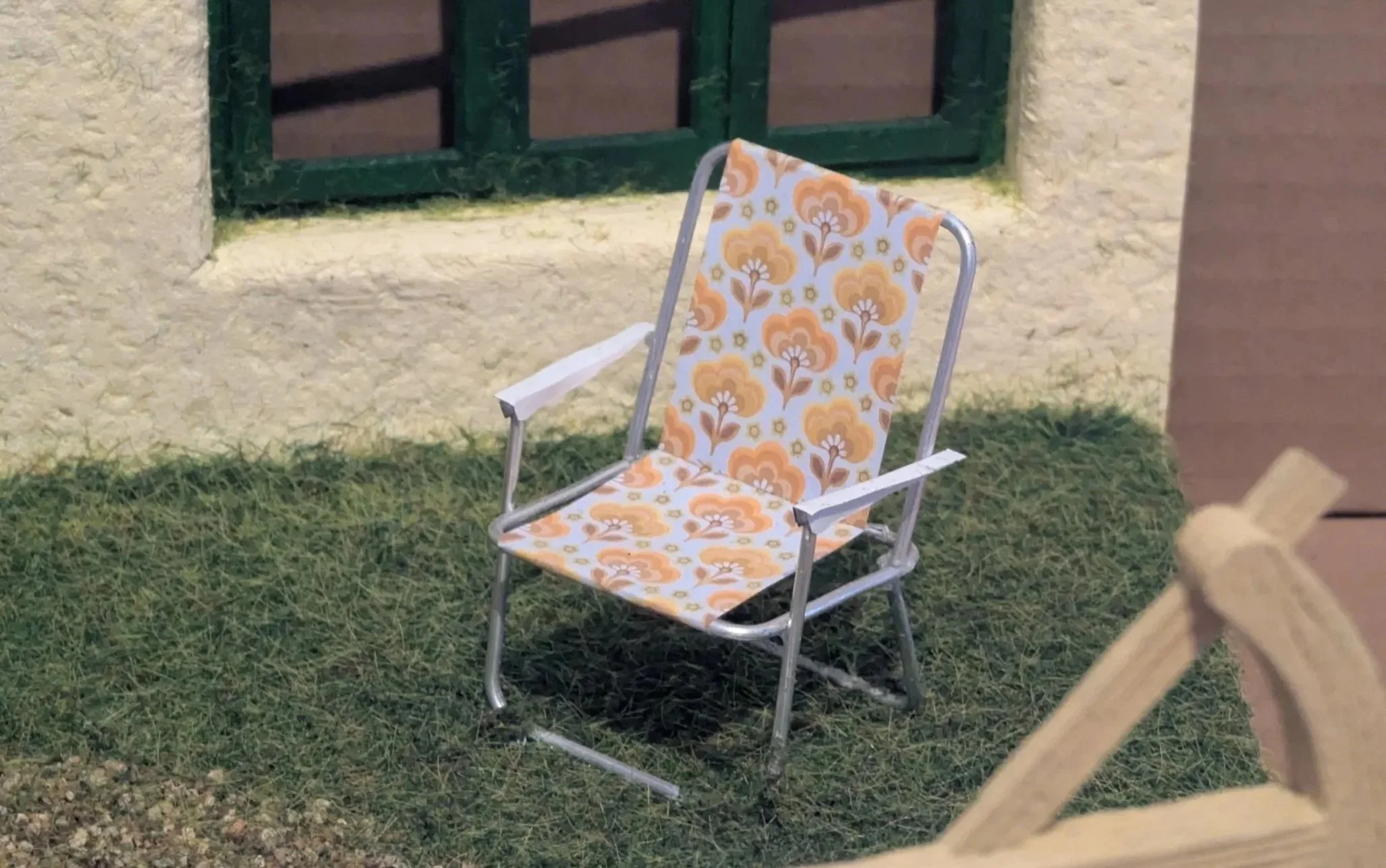
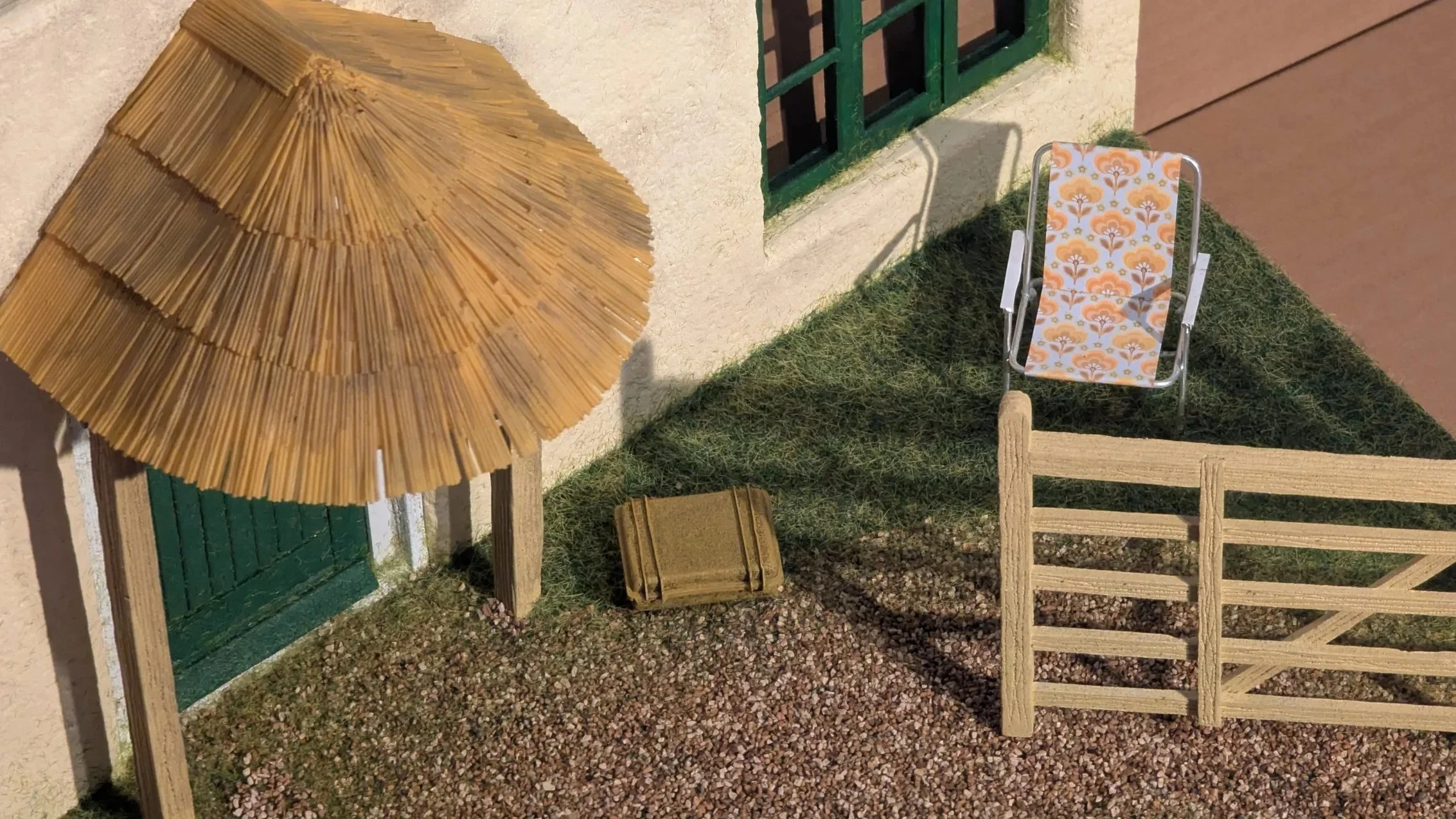
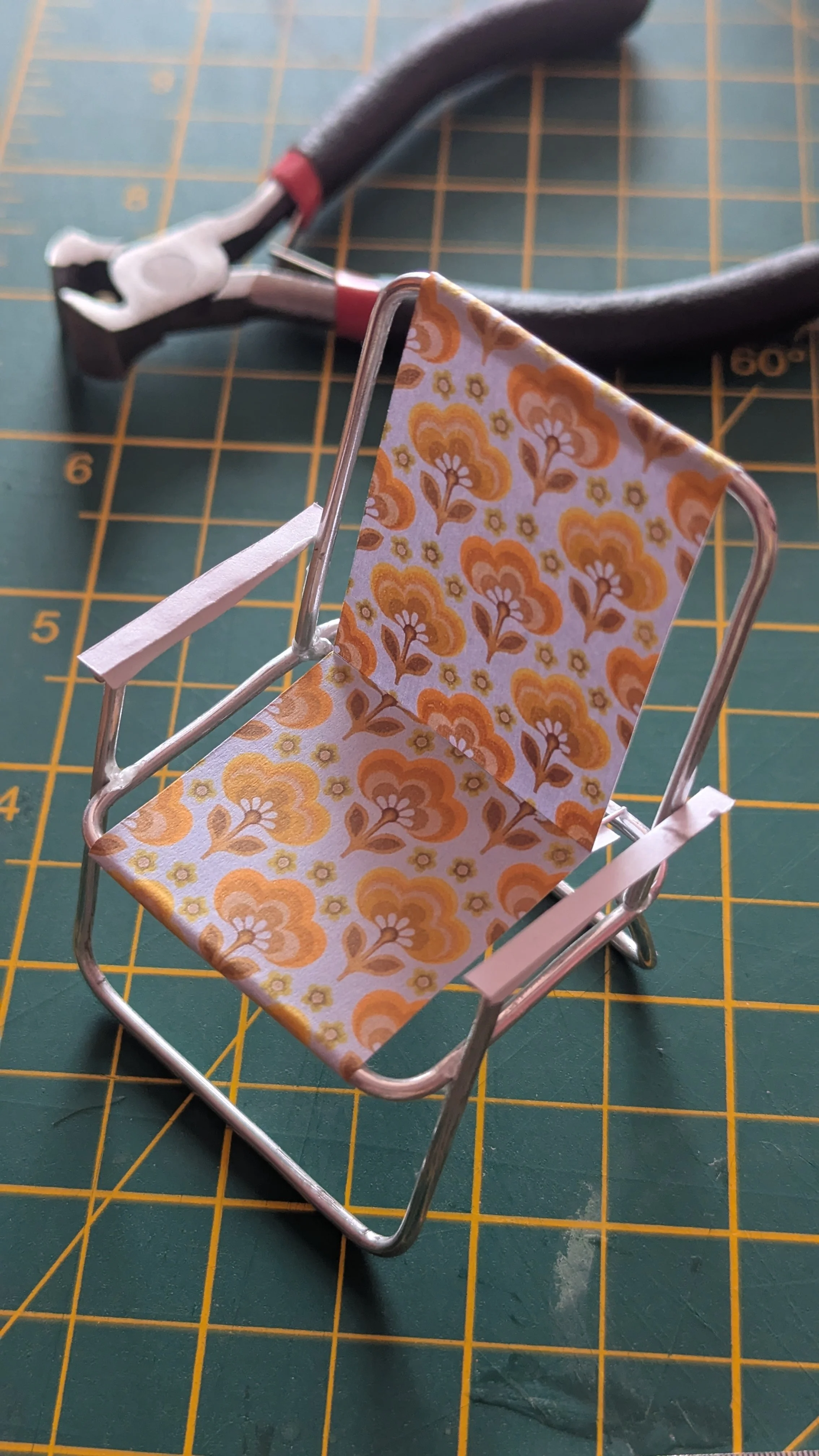
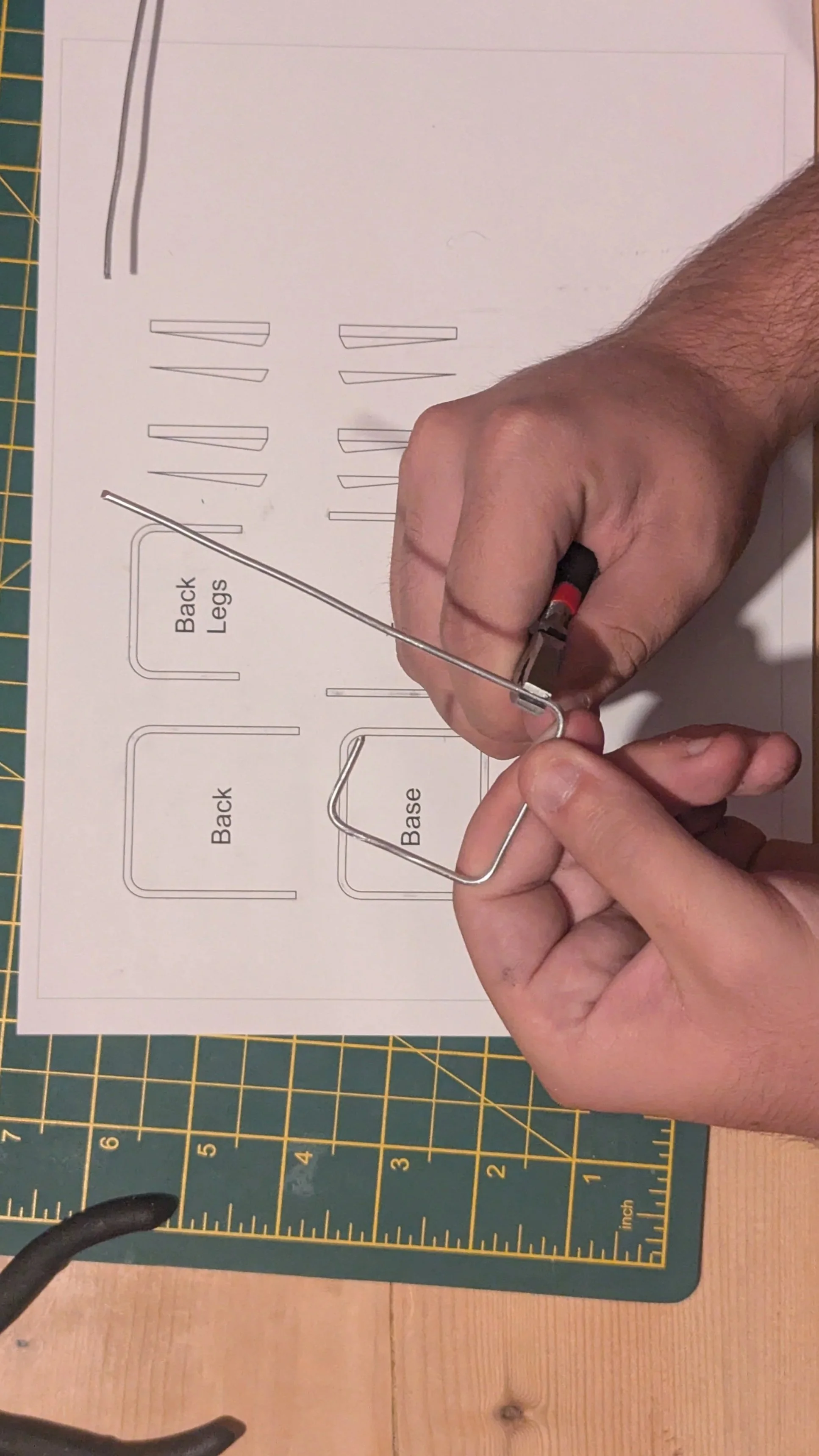
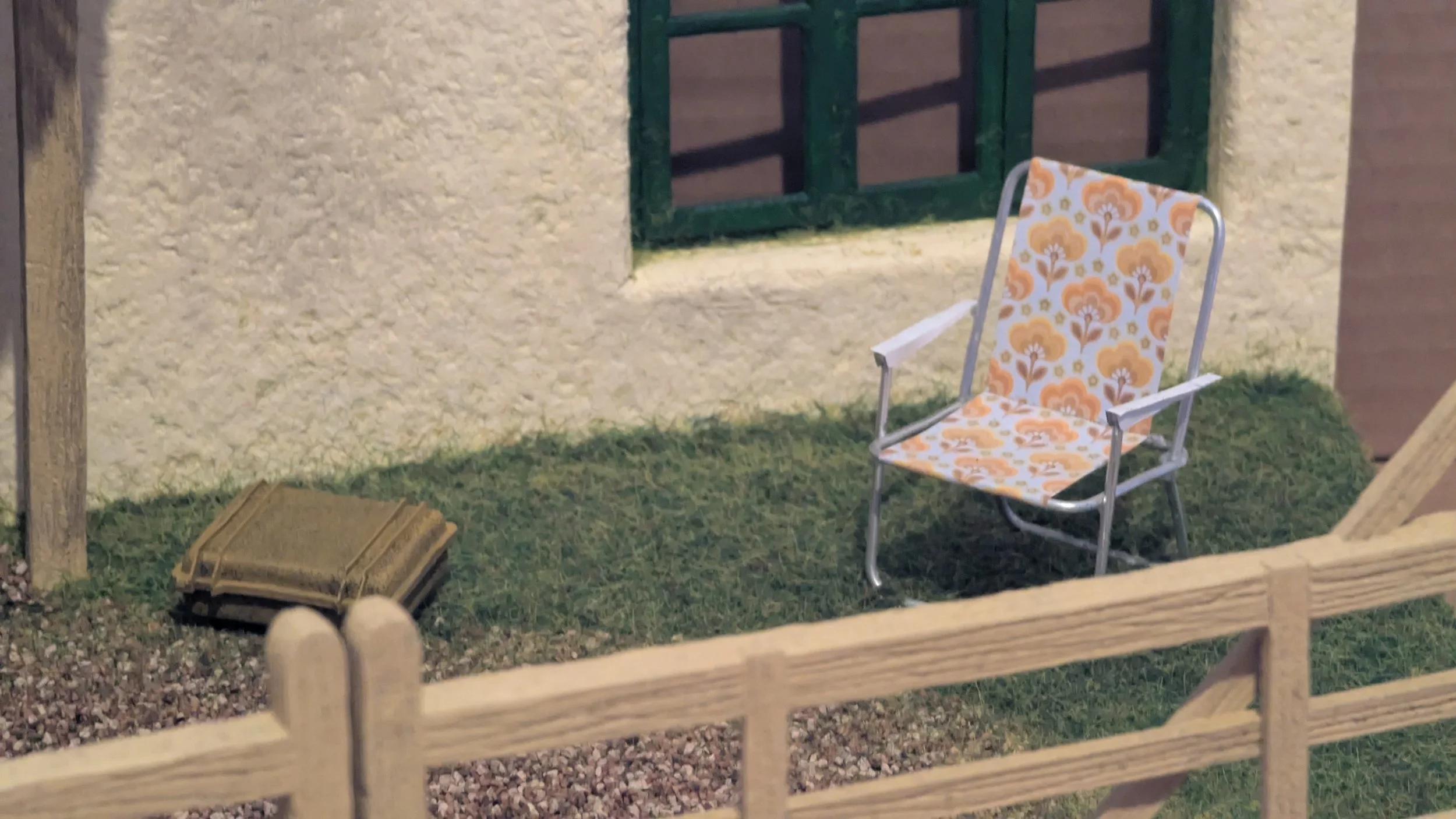
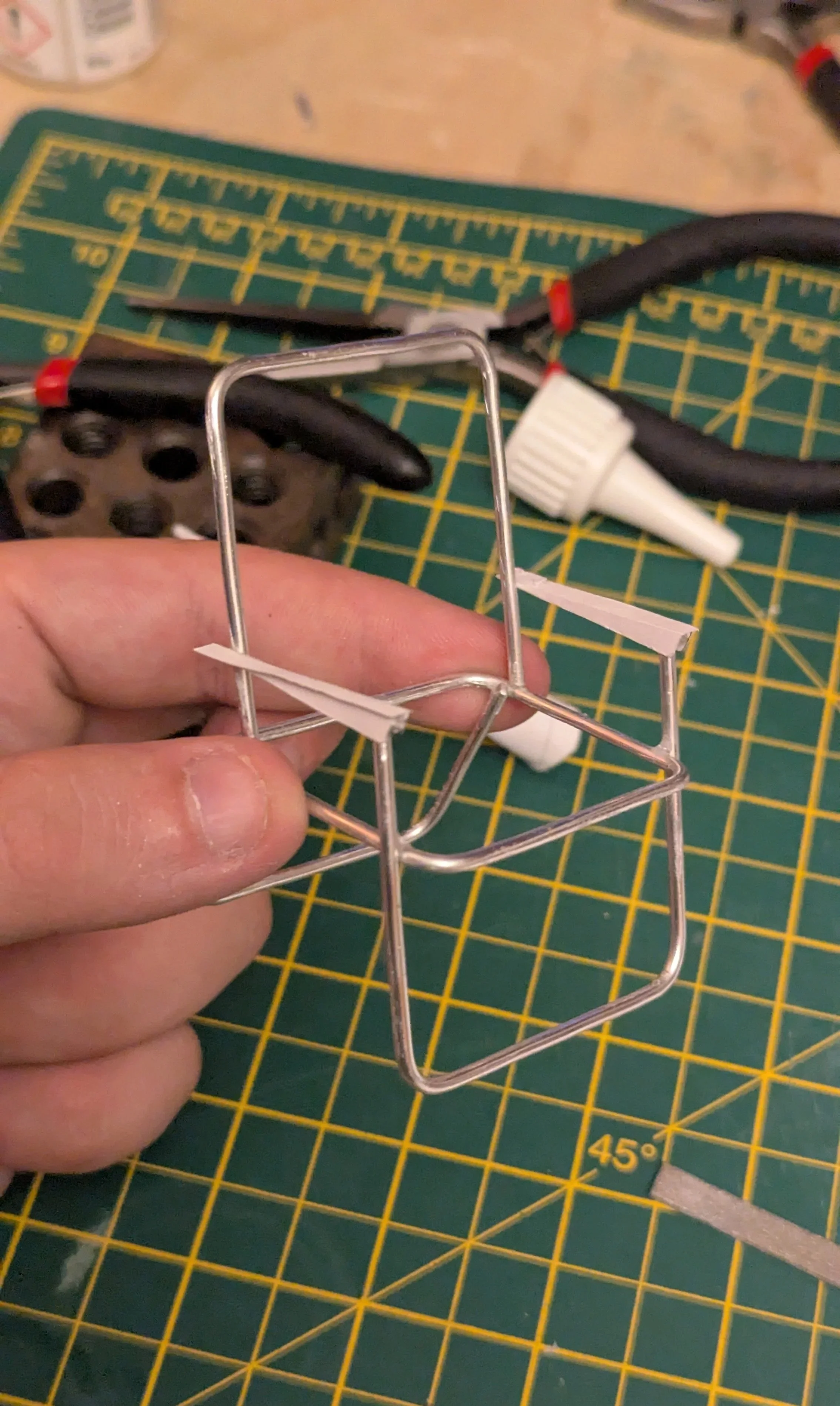
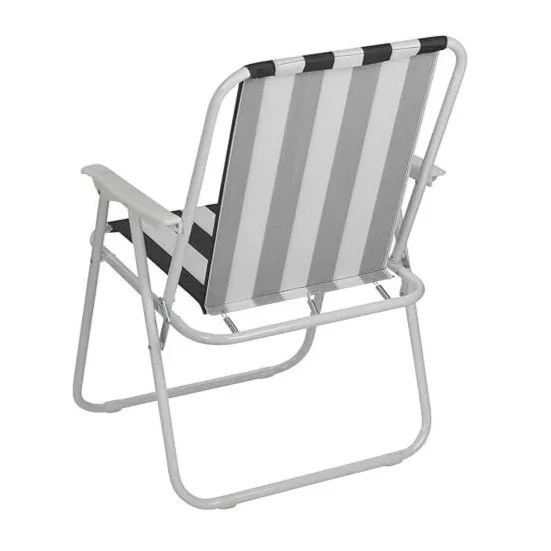
The design was based on a 1970s foldable garden chair. I made the metal legs from armature wire and bent each section using an AutoCad template that I drew. The seat fabric is a 70s pattern printed on paper.
Double Gate
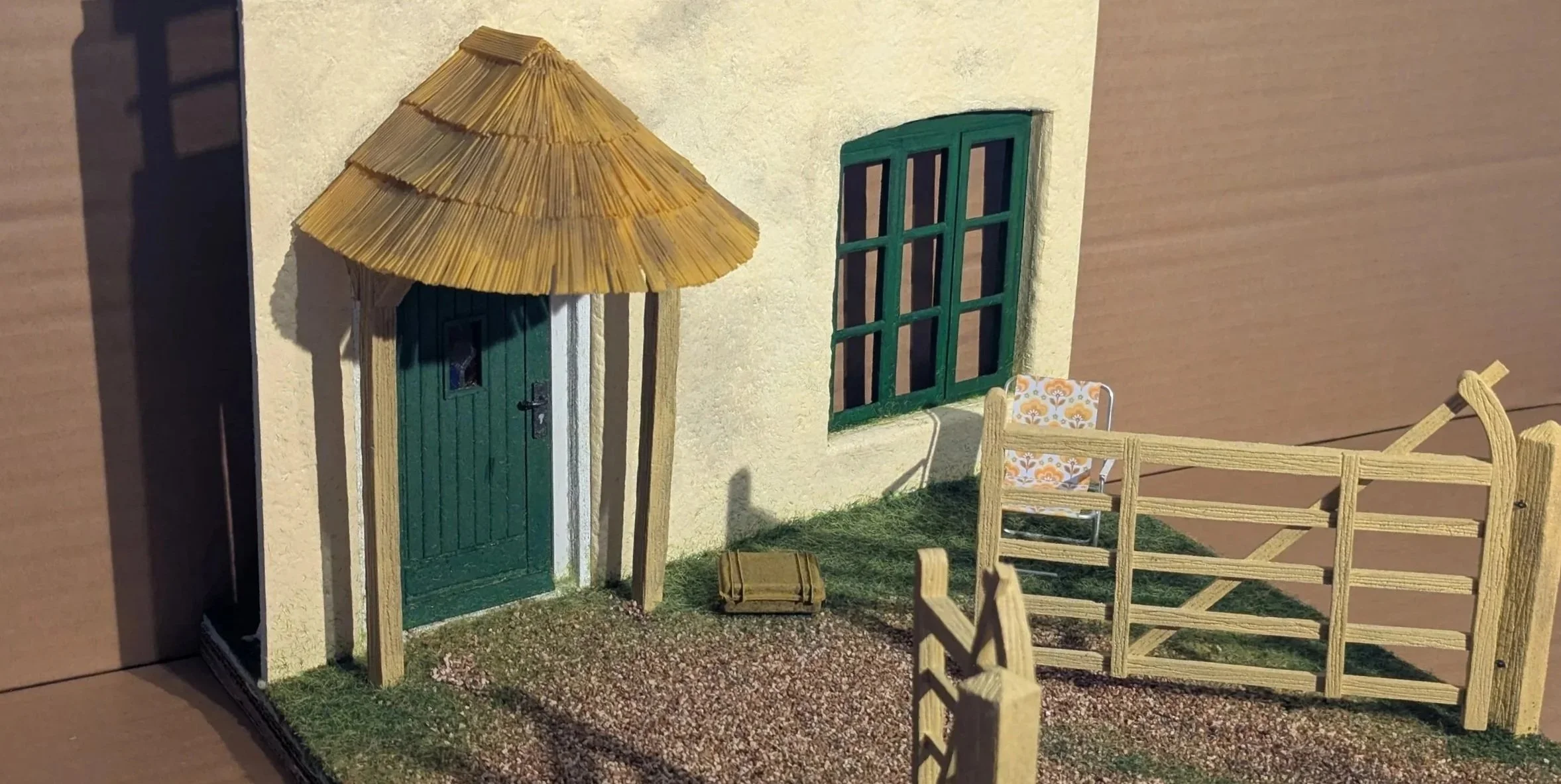
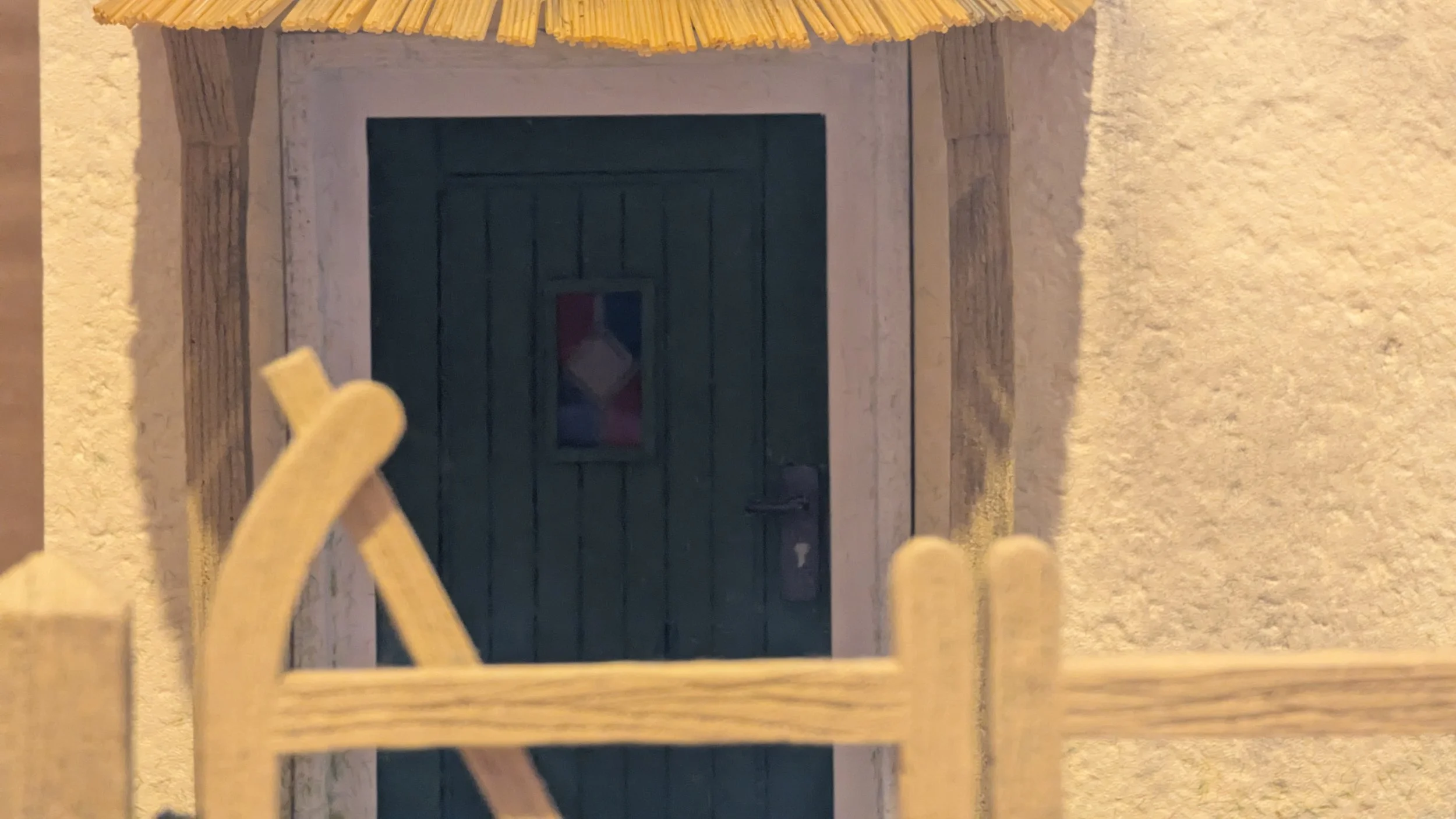
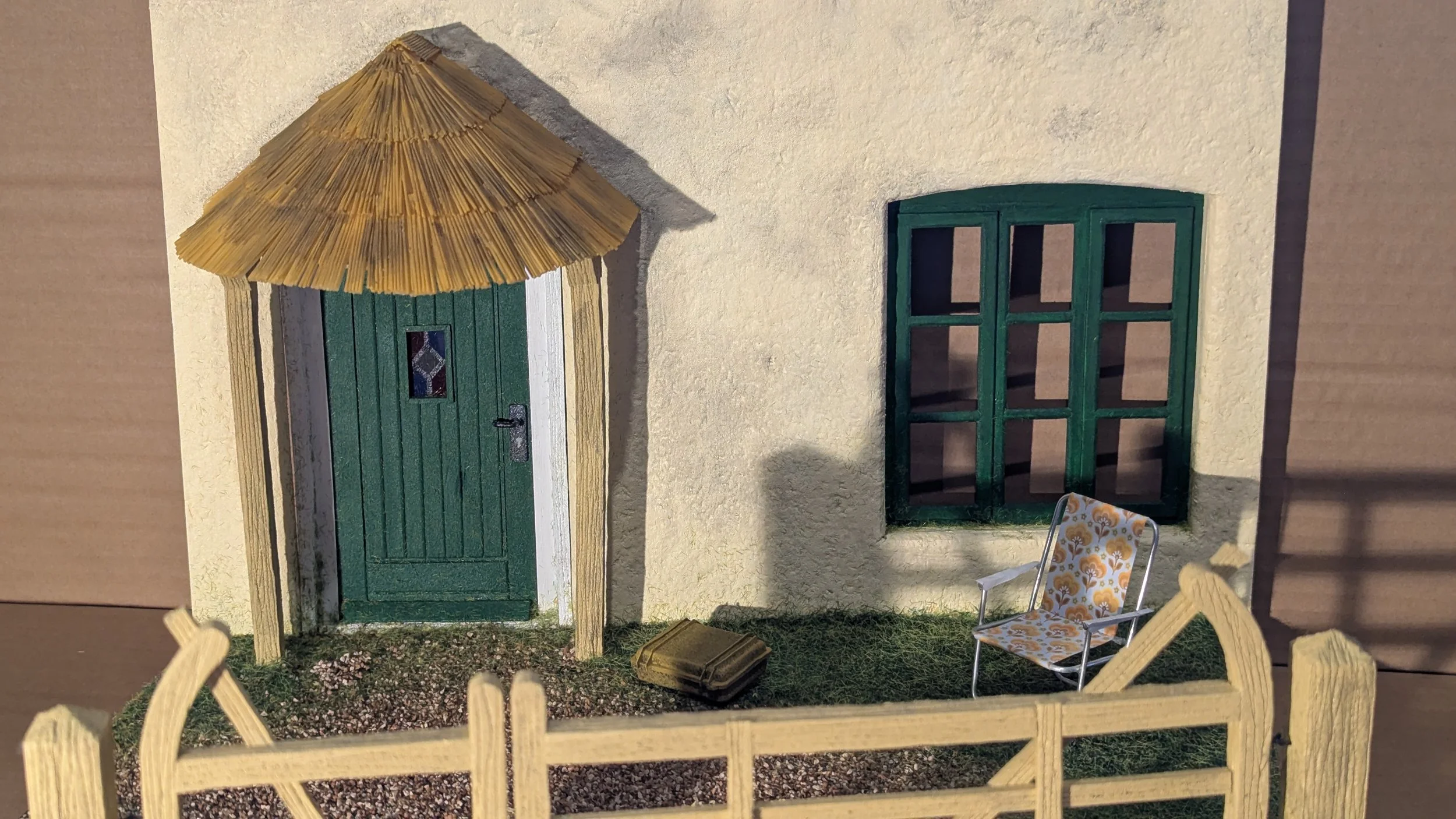
Re-Boot is an animation set design and build based on a self-authored (rediculously silly and satirical) short film script. The storyline follows two older residents of an eighteenth century cottage, ‘Sink’ and ‘Swim’, who find that the need their computer ‘re-booting’. ‘Hook’ and ‘Crook’ eventually arrive to ‘re-boot’ the computer through the window.
Re-Boot.
(Hypothetical) Animation Set Design and Build
Design Development
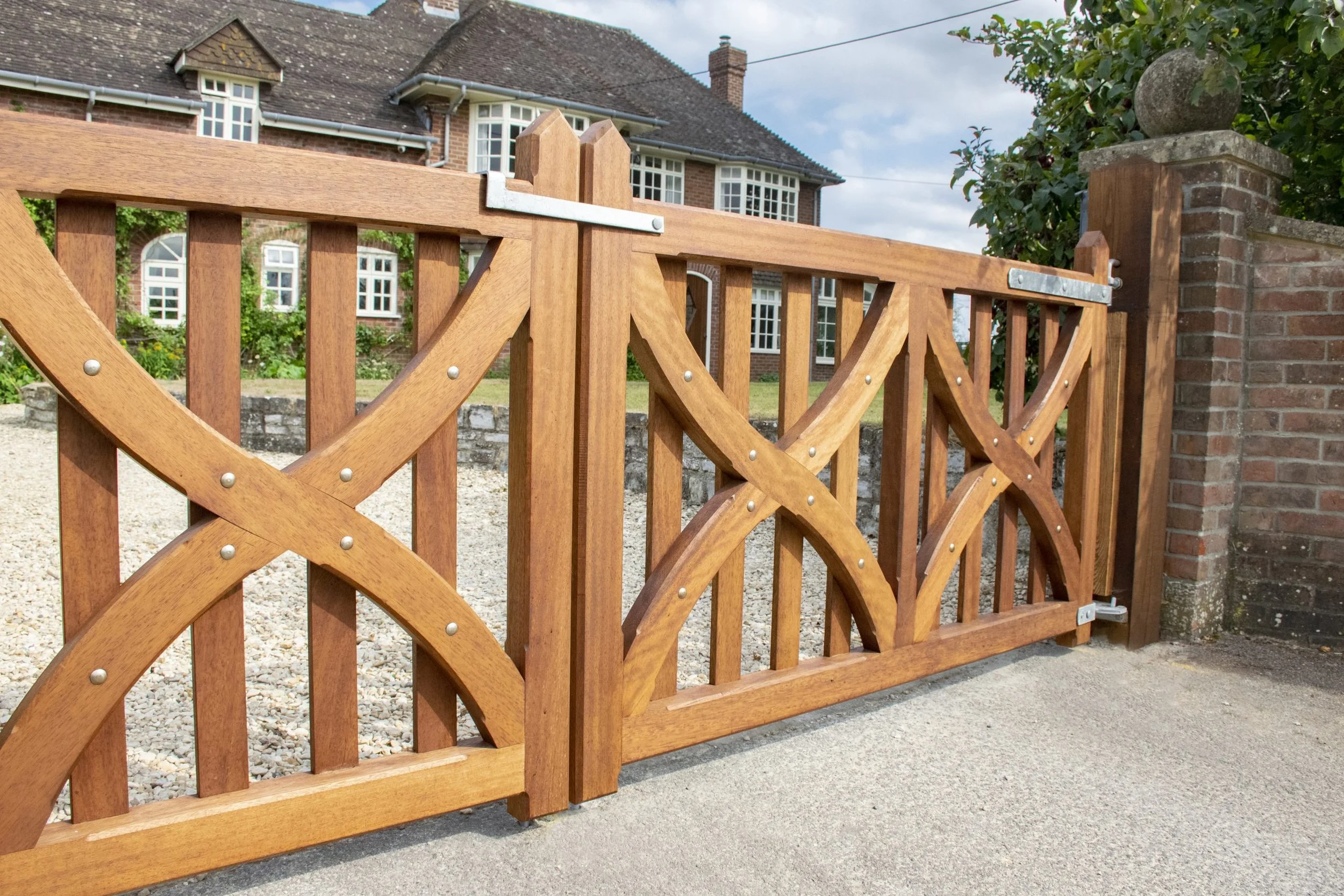
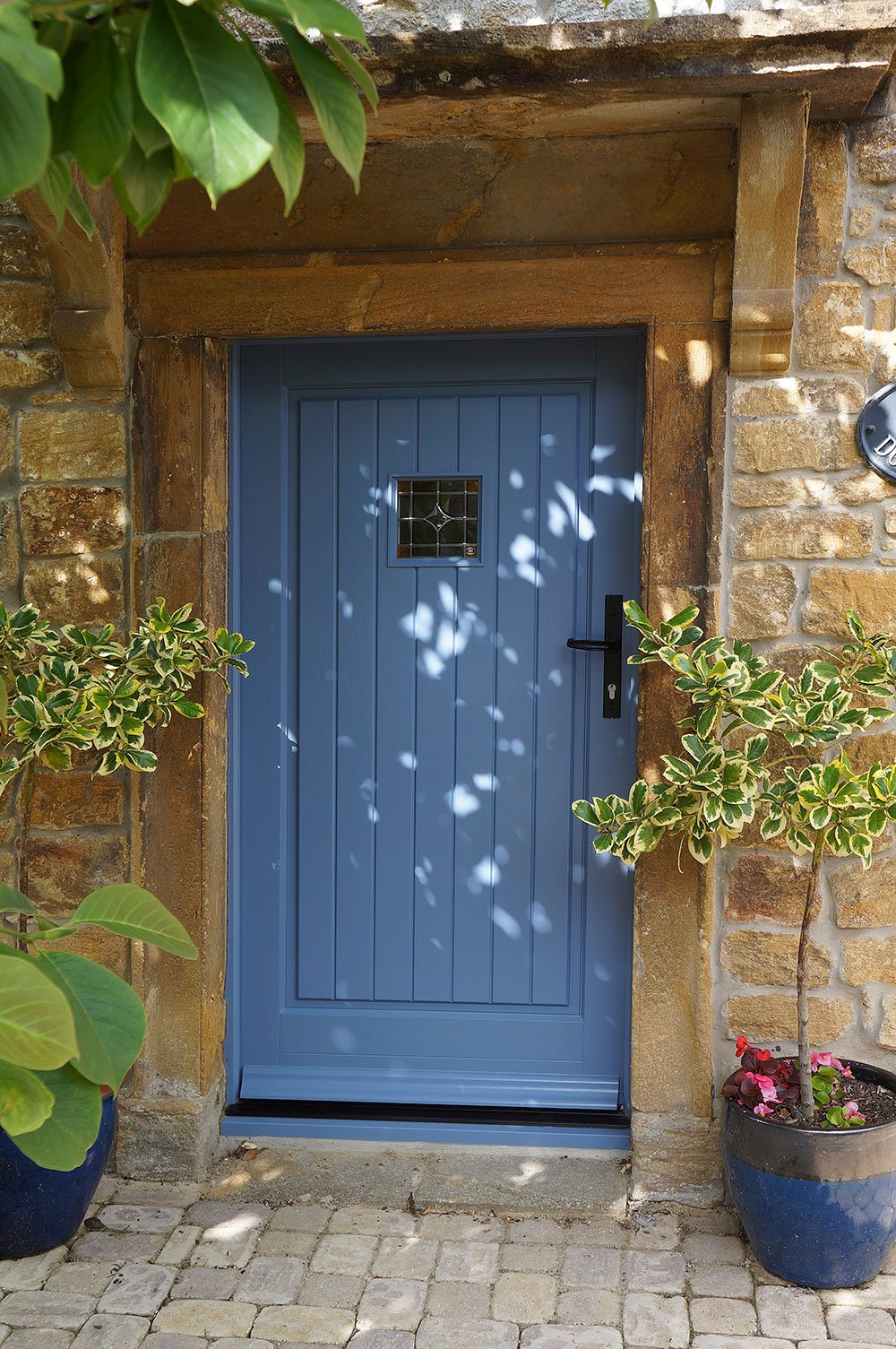
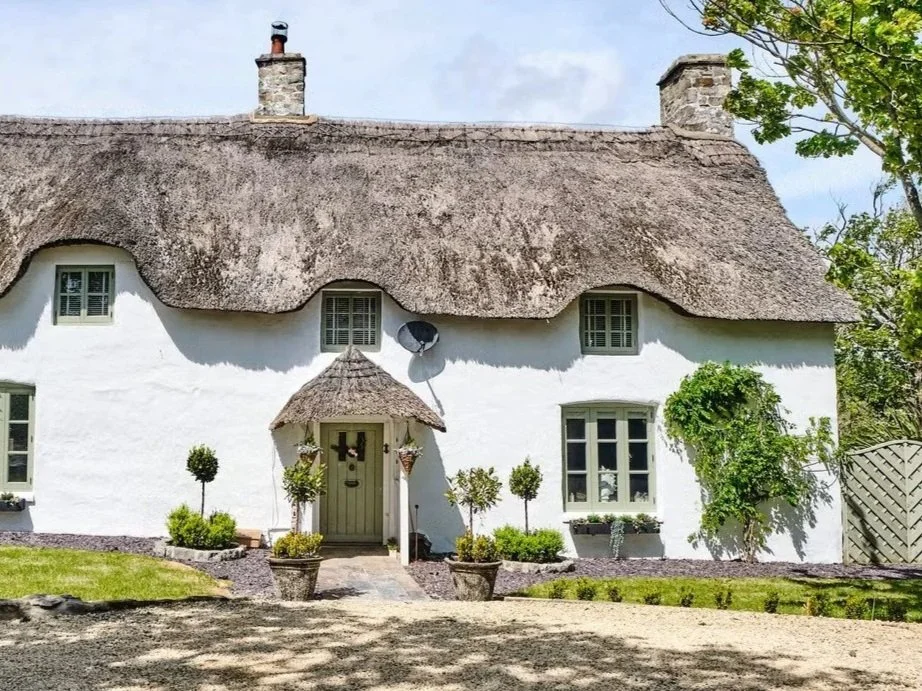
Once I had identified the key elements, I found precedent images for design inspiration.
Structural Model Elements
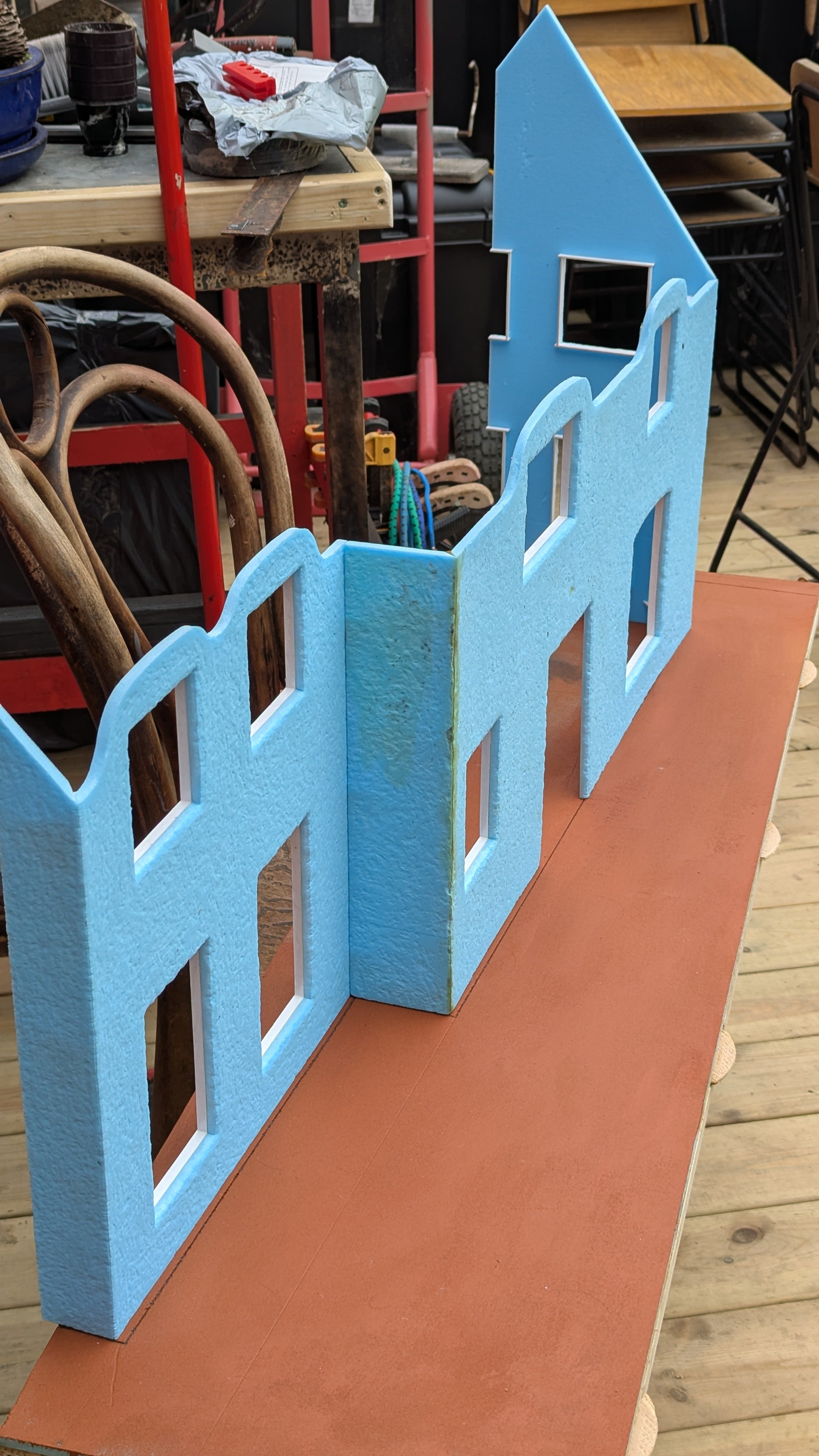
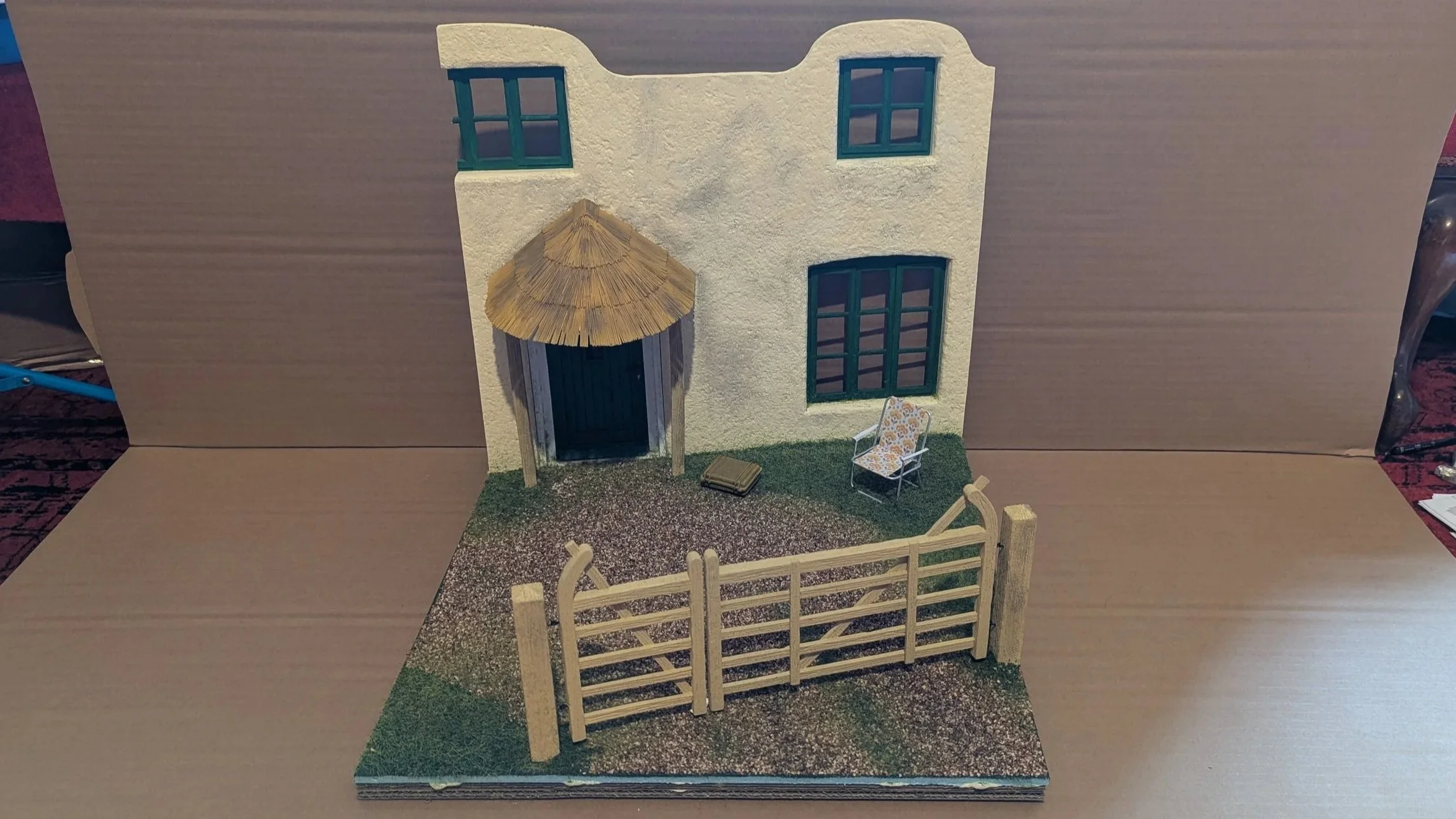
The Set model started with the front facade of the house. This was traced from an AutoCad drawing onto extruded polystyrene foam board. Windows were cut out, and mountboard returns were added. The whole facade was then glued to the base board. This was then painted with a base coat of acrylic.
Front Door
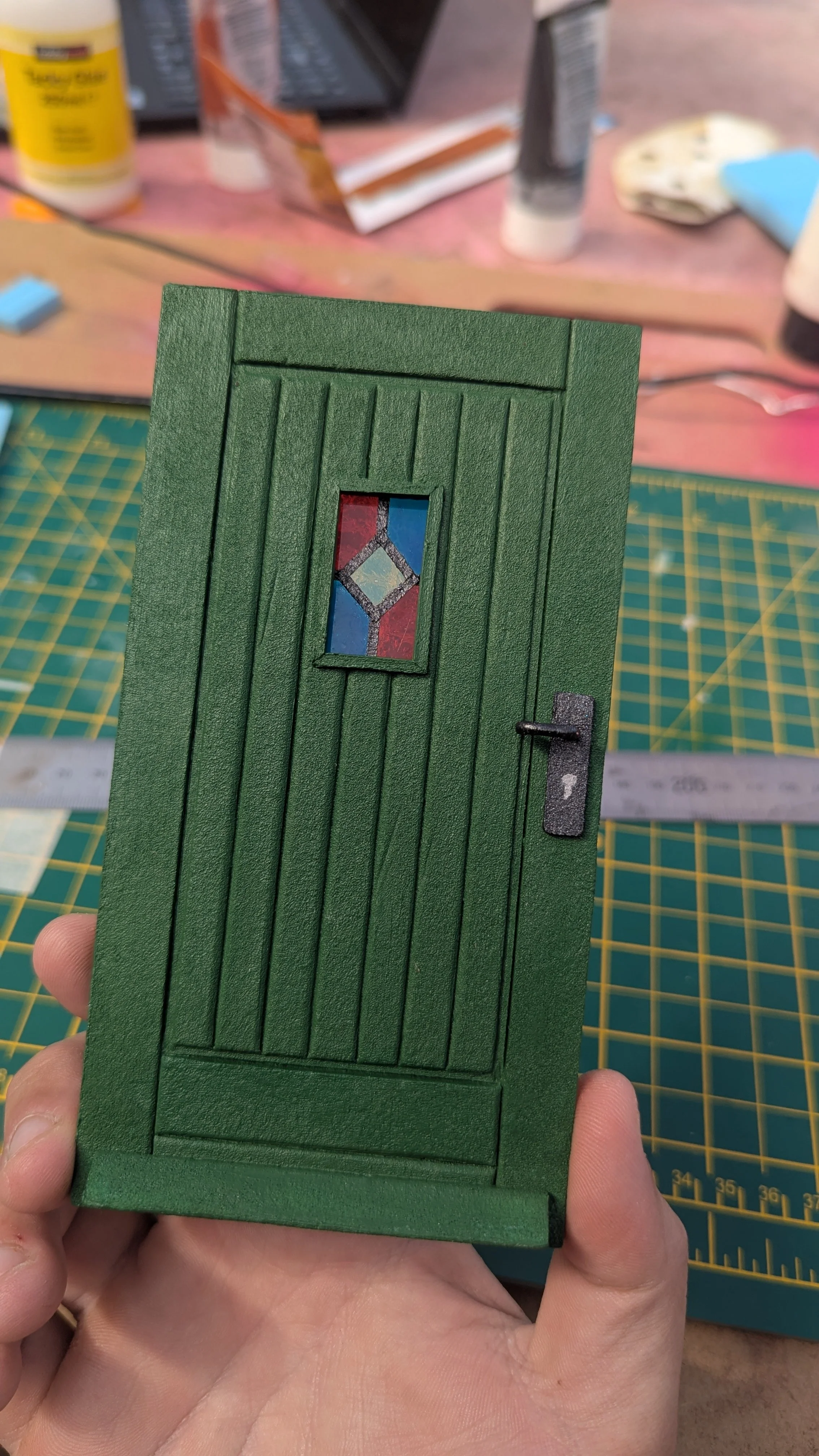
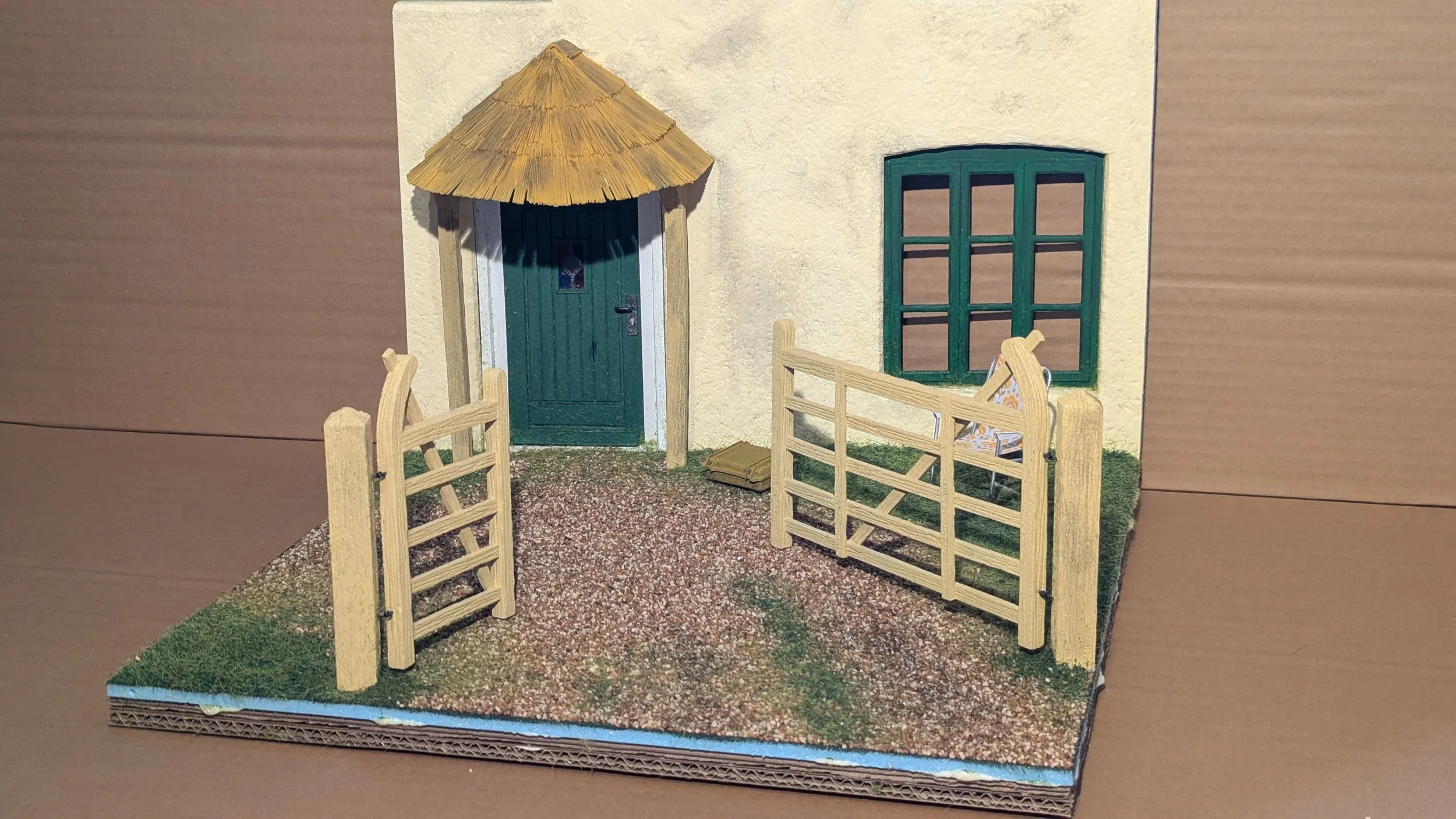
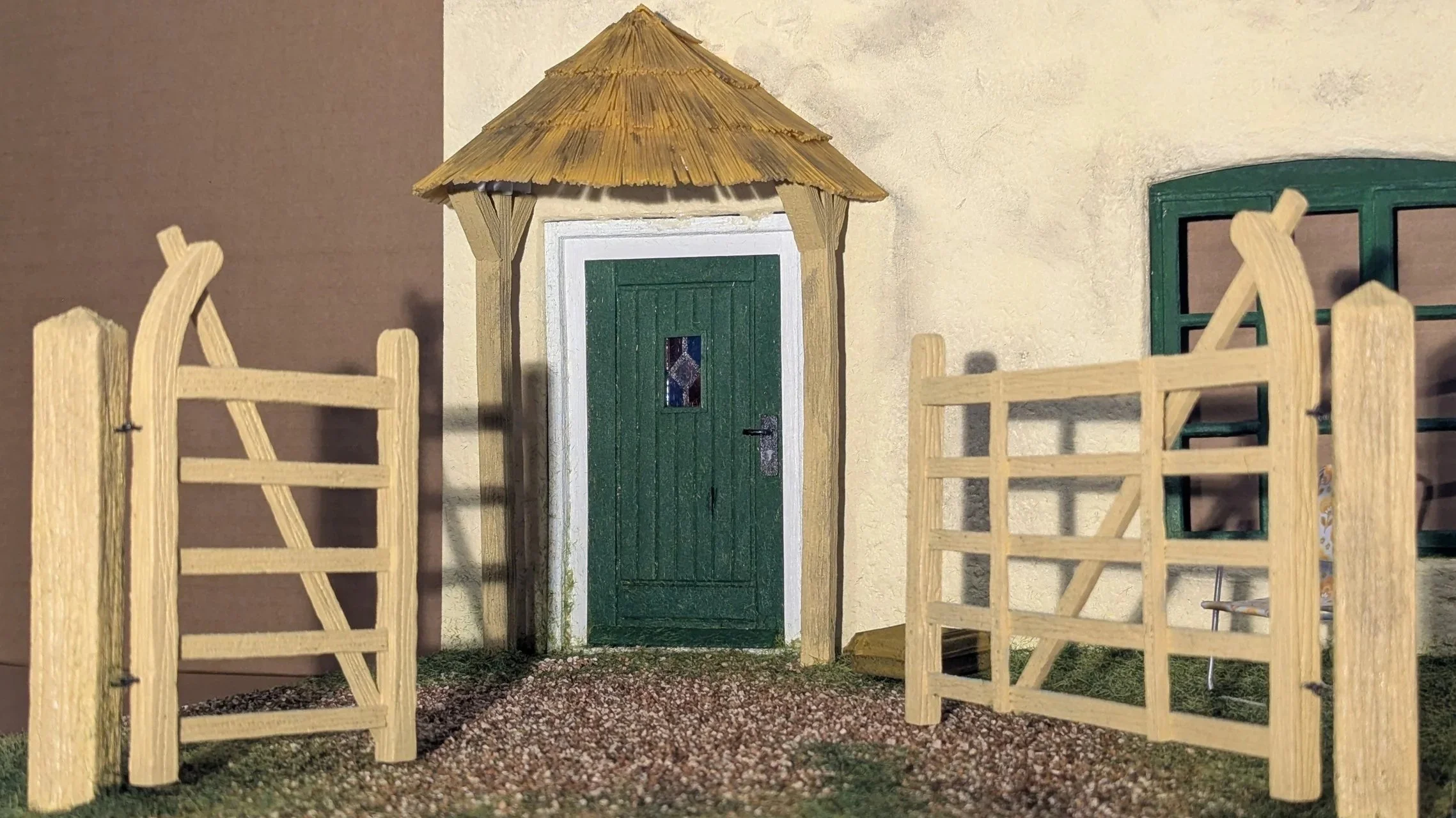
The front door of the cottage was based on a eighteenth century door found in my preliminary research. Made of XPS foam, it has wood texture pressed and carved into it, and an immitation stained glass window. The door handle was made from armature wire and painted.
Thatched Porch
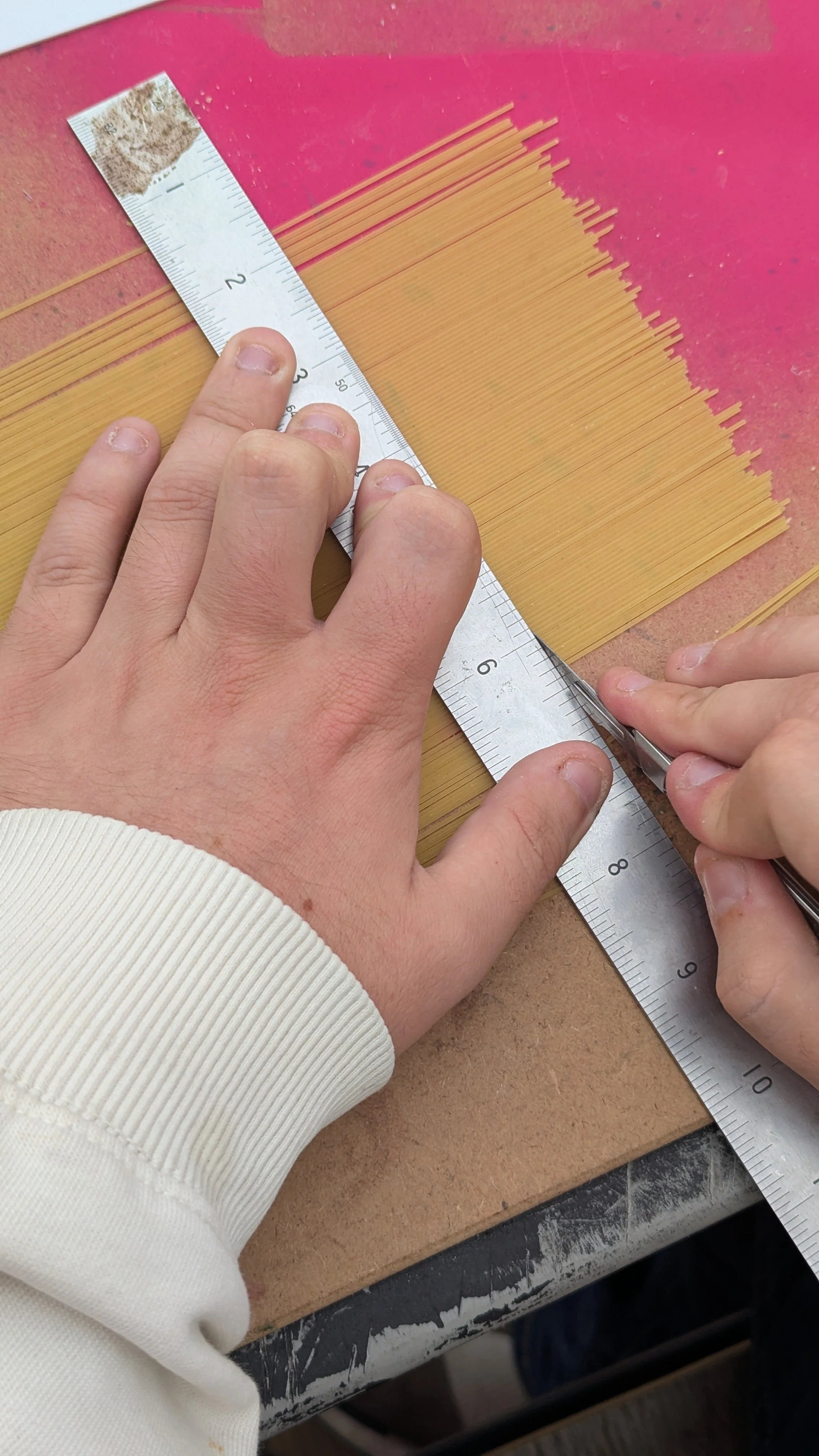
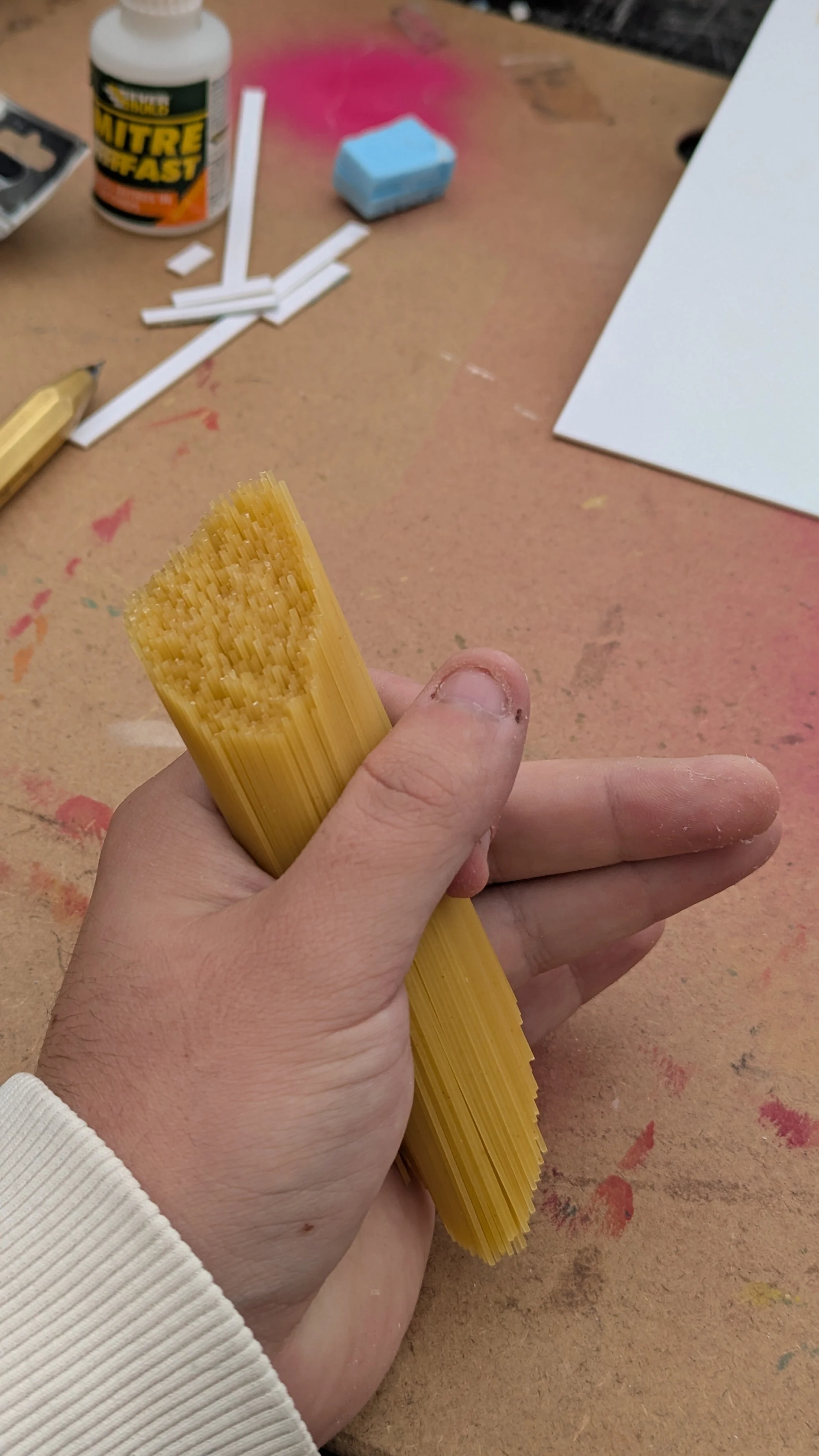
The thatched porch is made with capelino pasta cut into short lengths. It is layed on a paper skeleton to hold the shape. The ‘wooden’ structure of the porch was made similarly to the ‘wood’ of the gate.
Script Excerpt
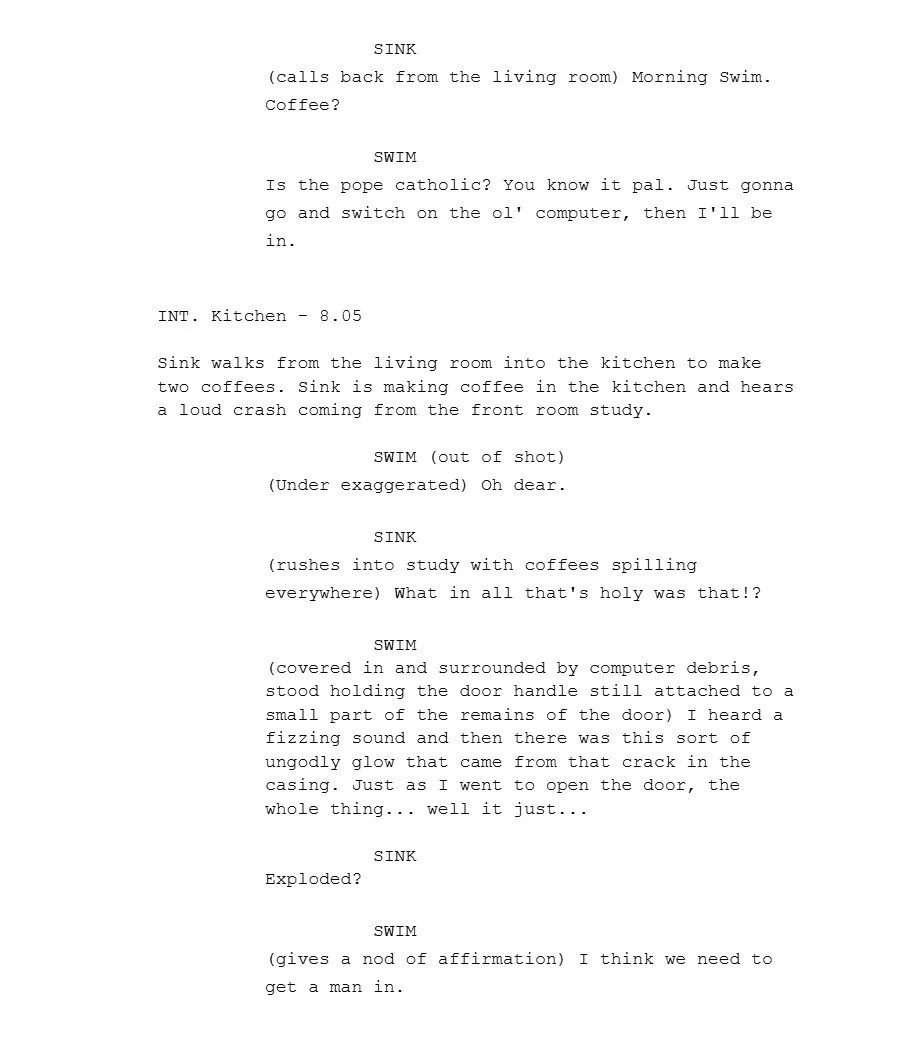
Here is an excerpt of Re-Boot. If you wish to read the full script, click on the button beneath the excerpt.
Initial Script Read
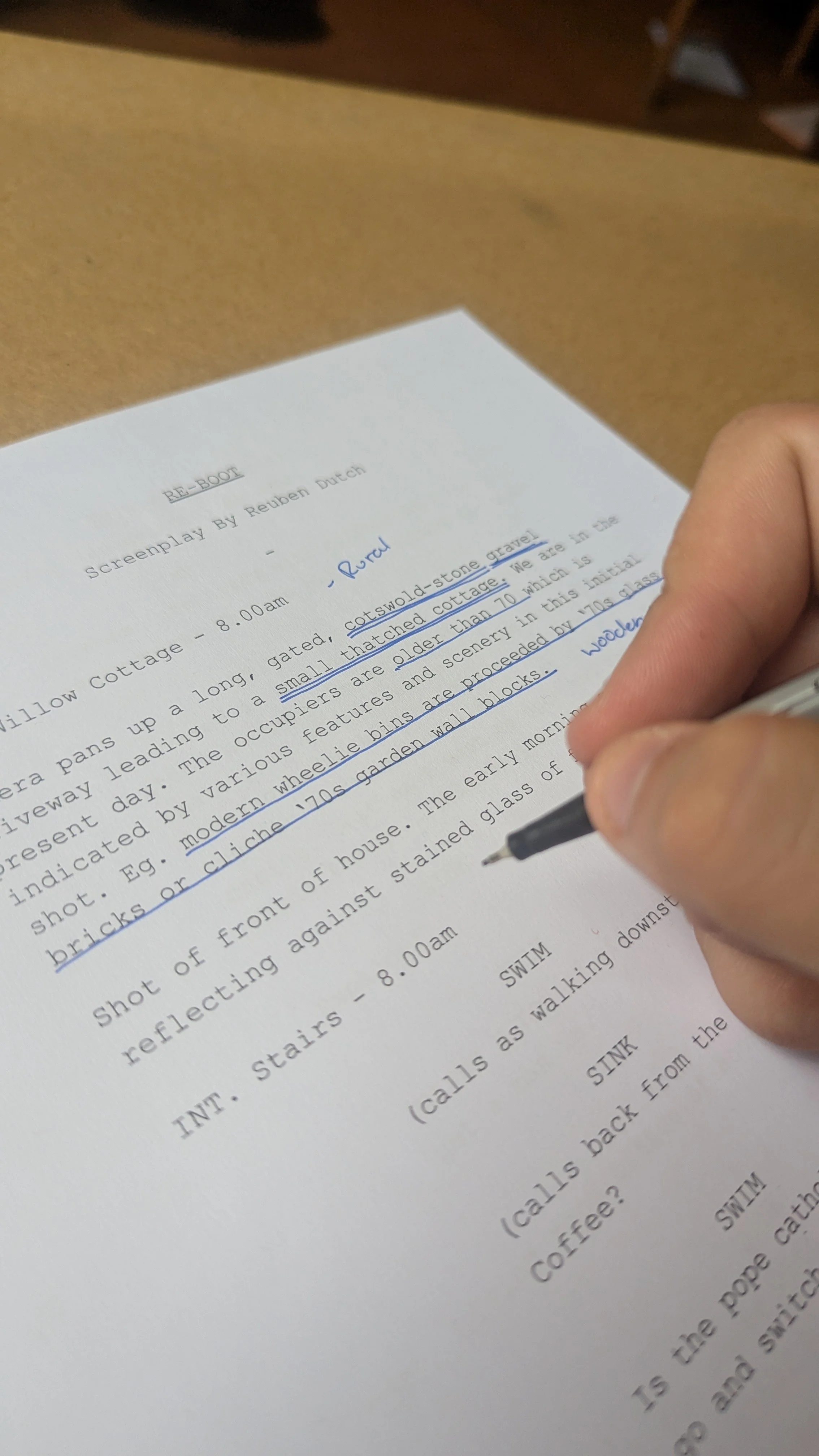
The design started with script annotation to identify the important set requirements.
I decided to design and build the house in which the protagonists reside, as well as a section of front garden.
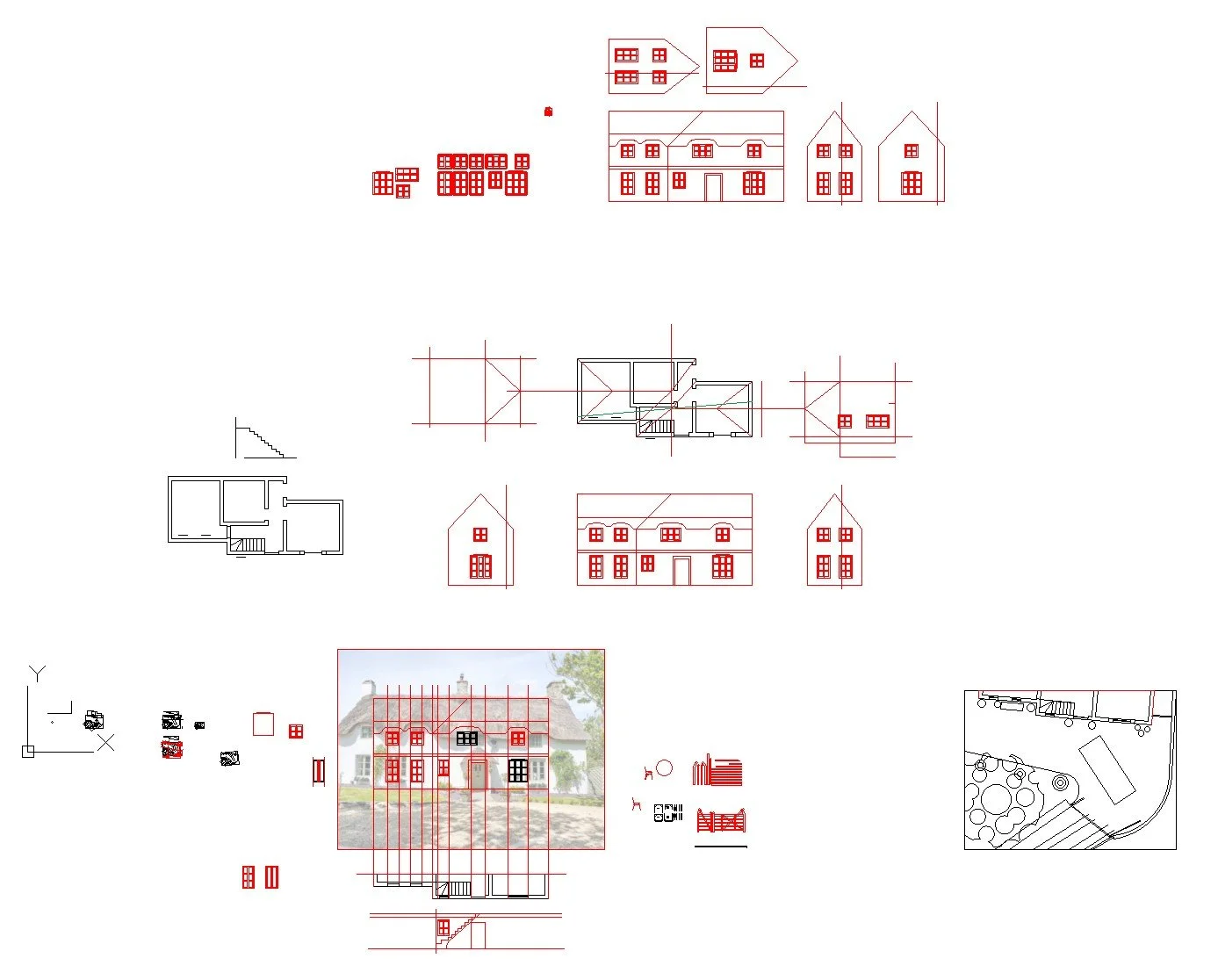
AutoCad
The spatial plans and elevations and other elements were drawn on AutoCad to be transferred to the modelling material. I created a ground plan, which enabled me to commense the model making process.
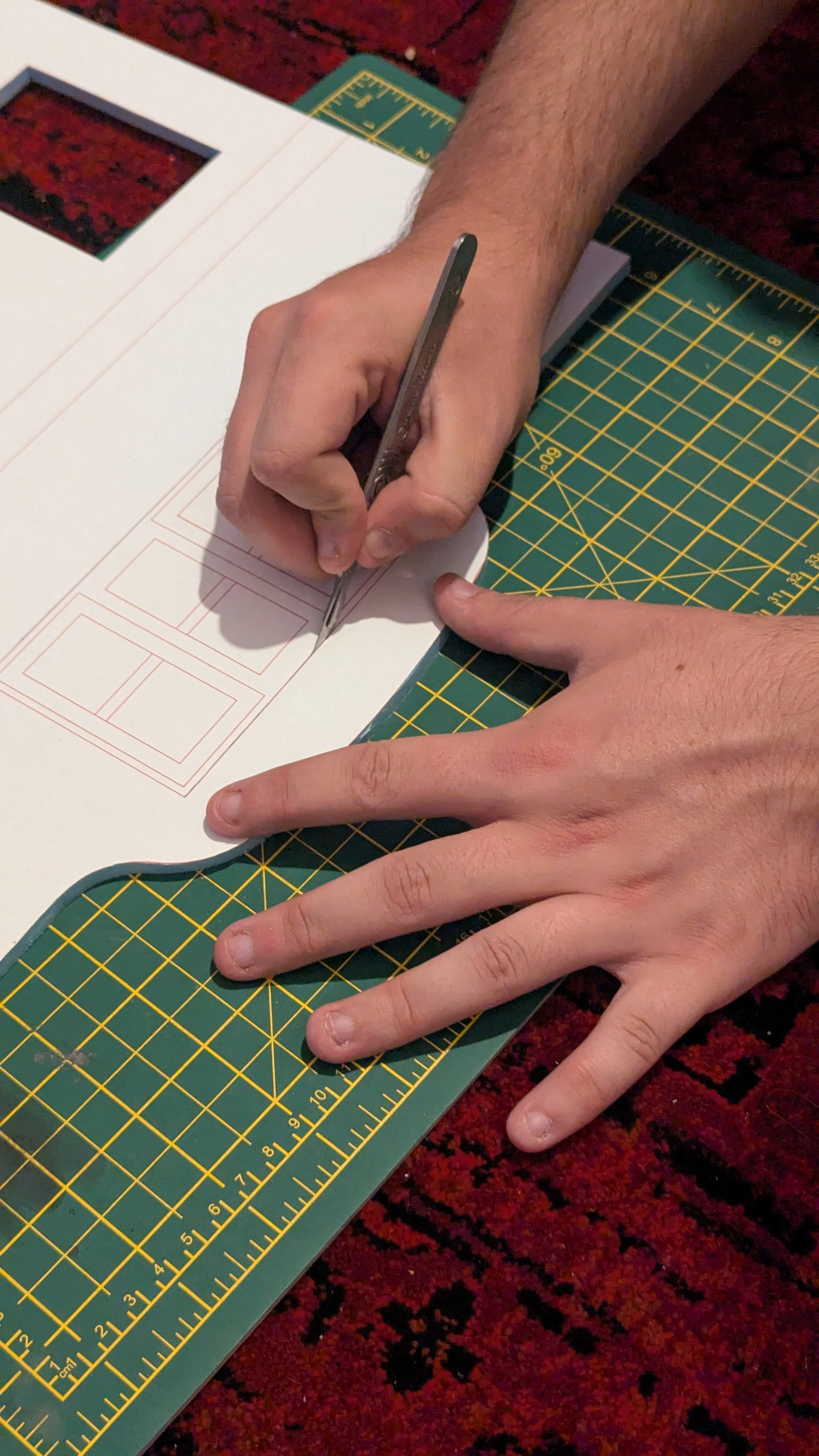
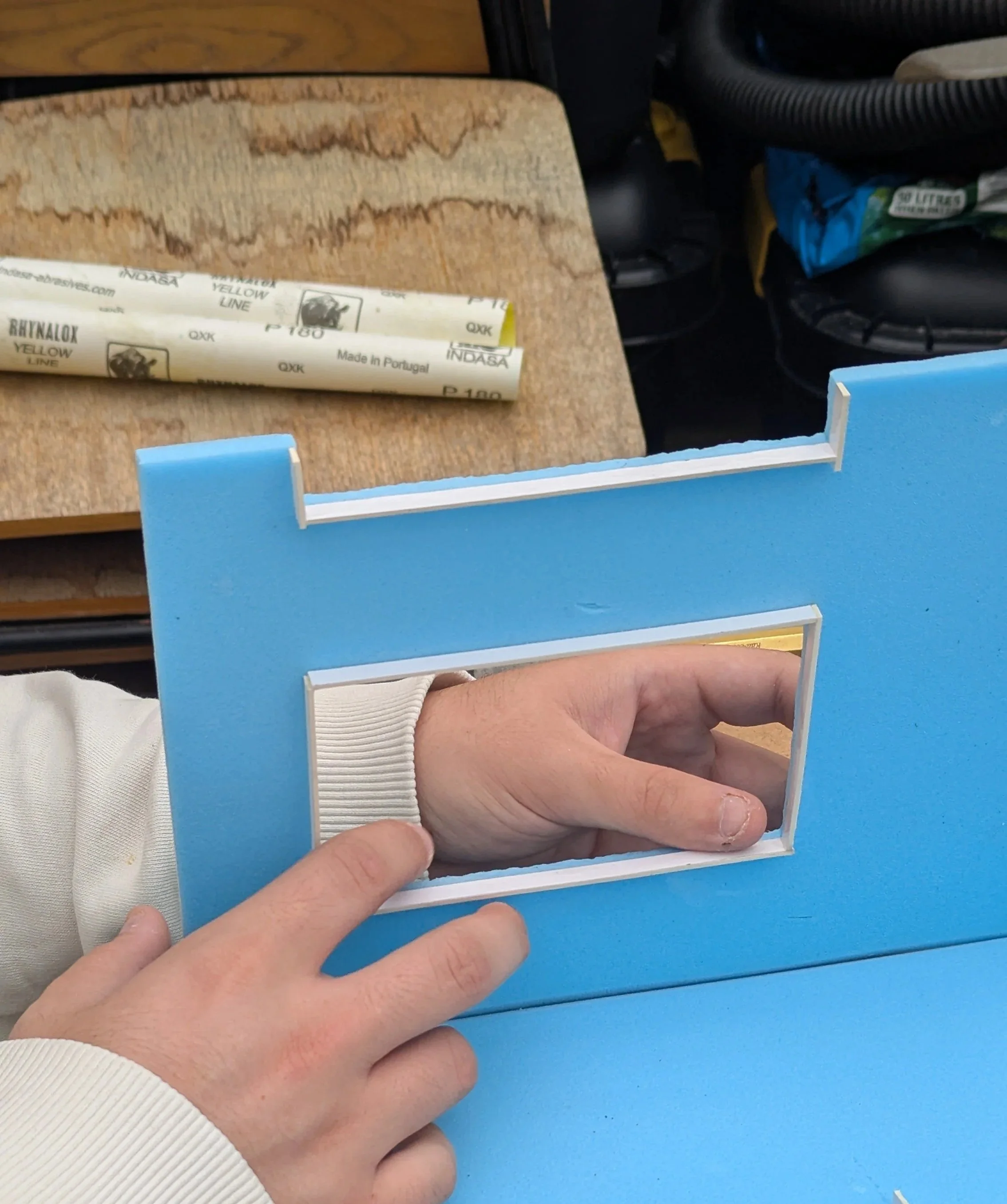
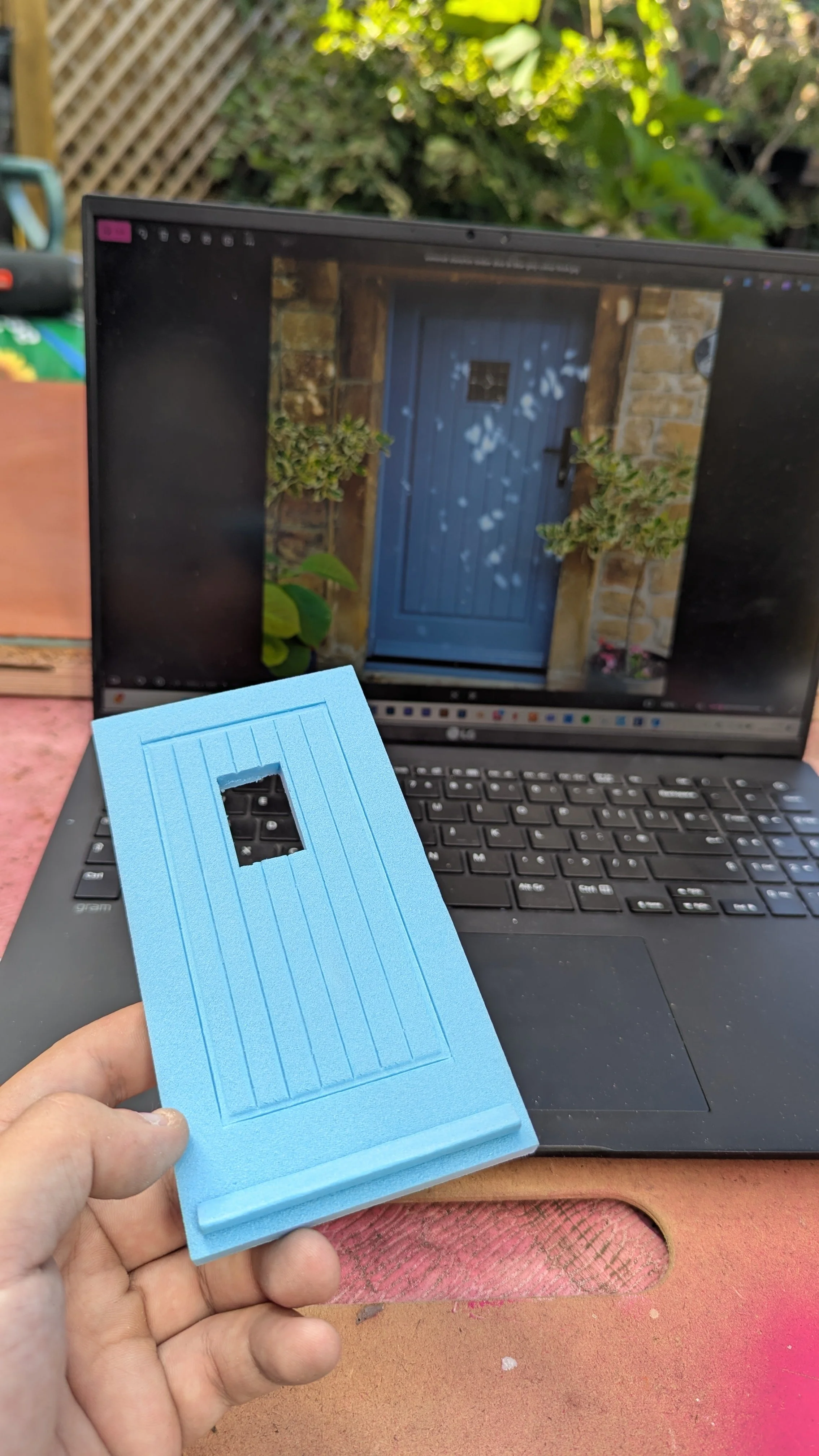
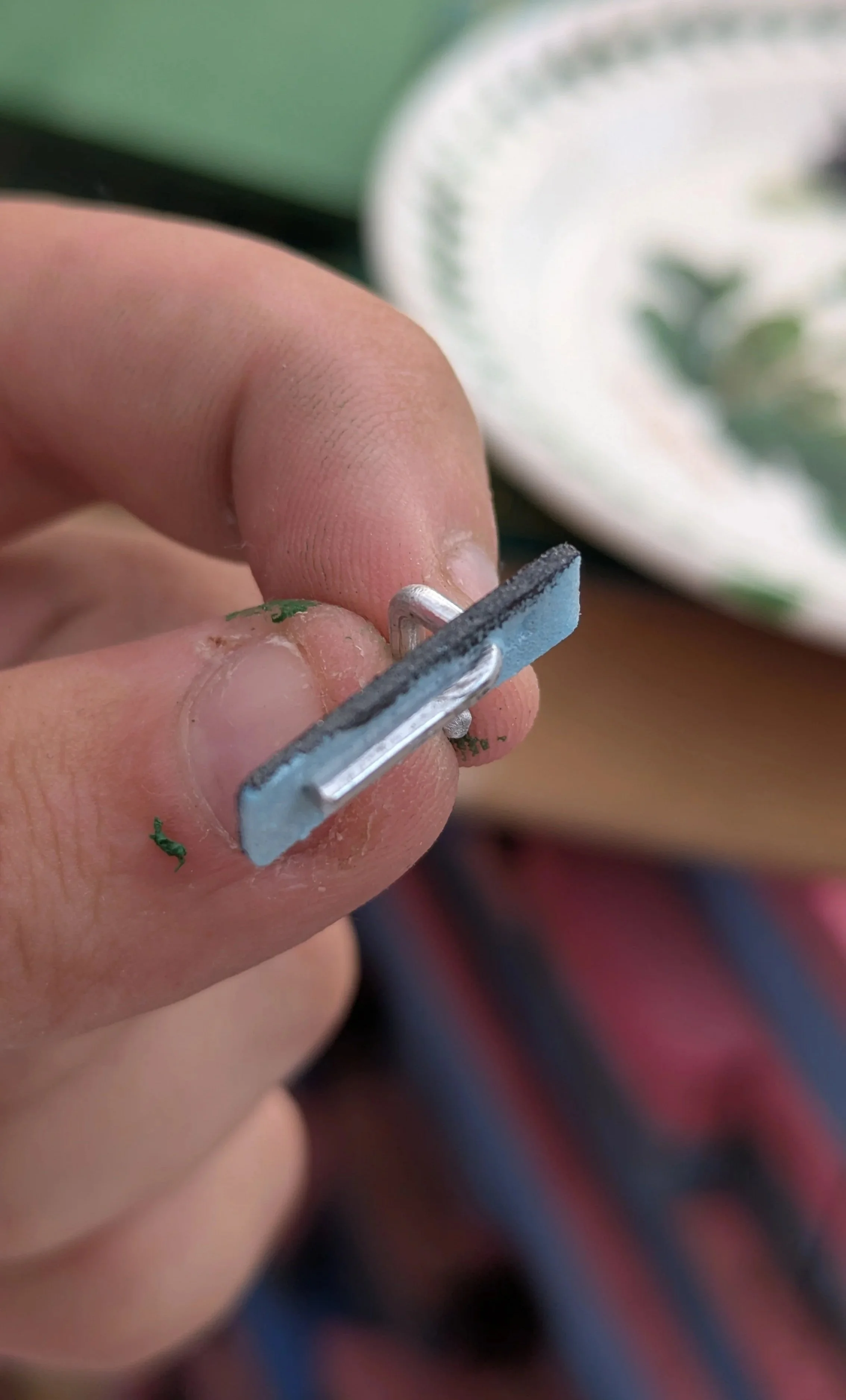
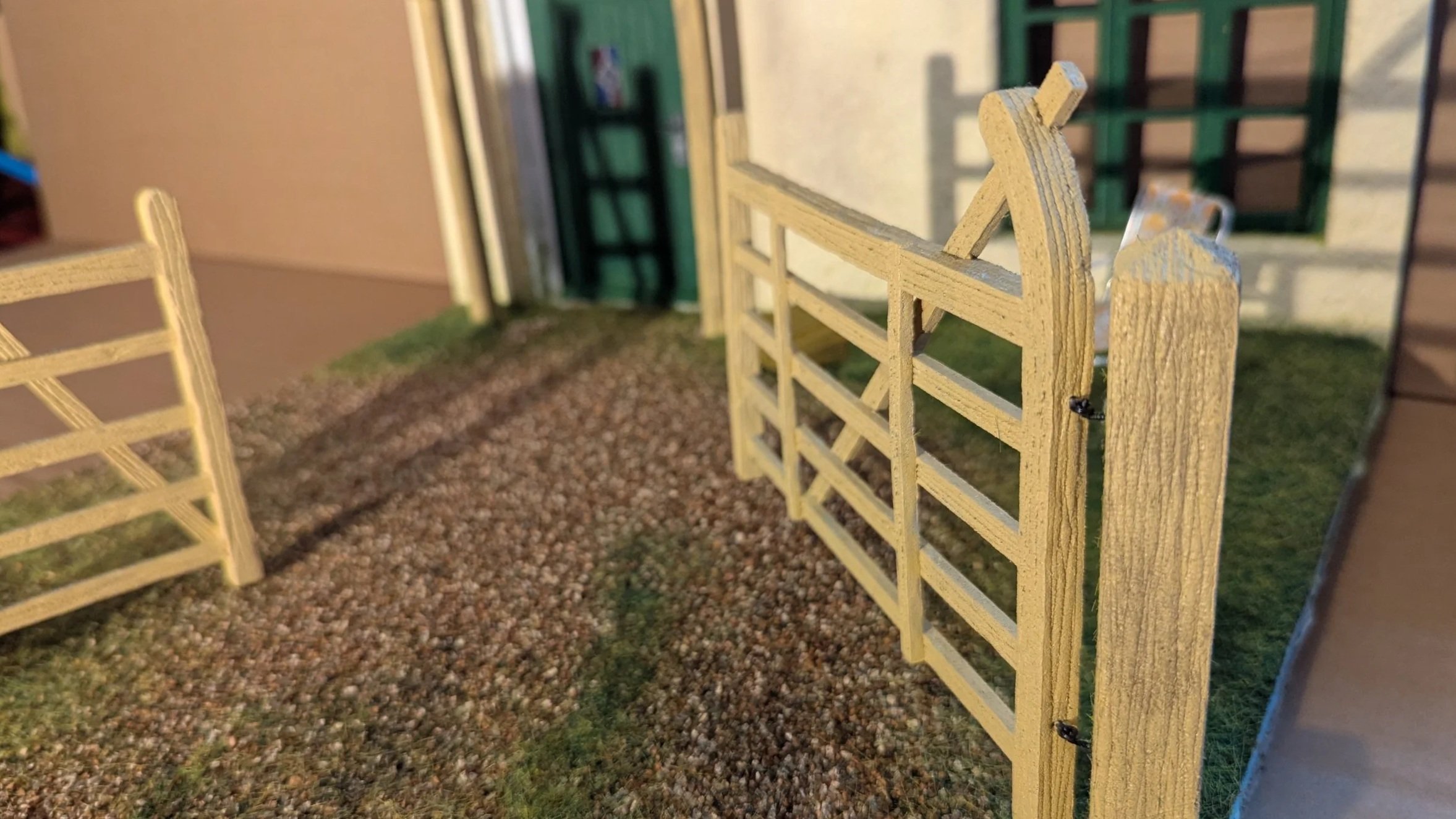
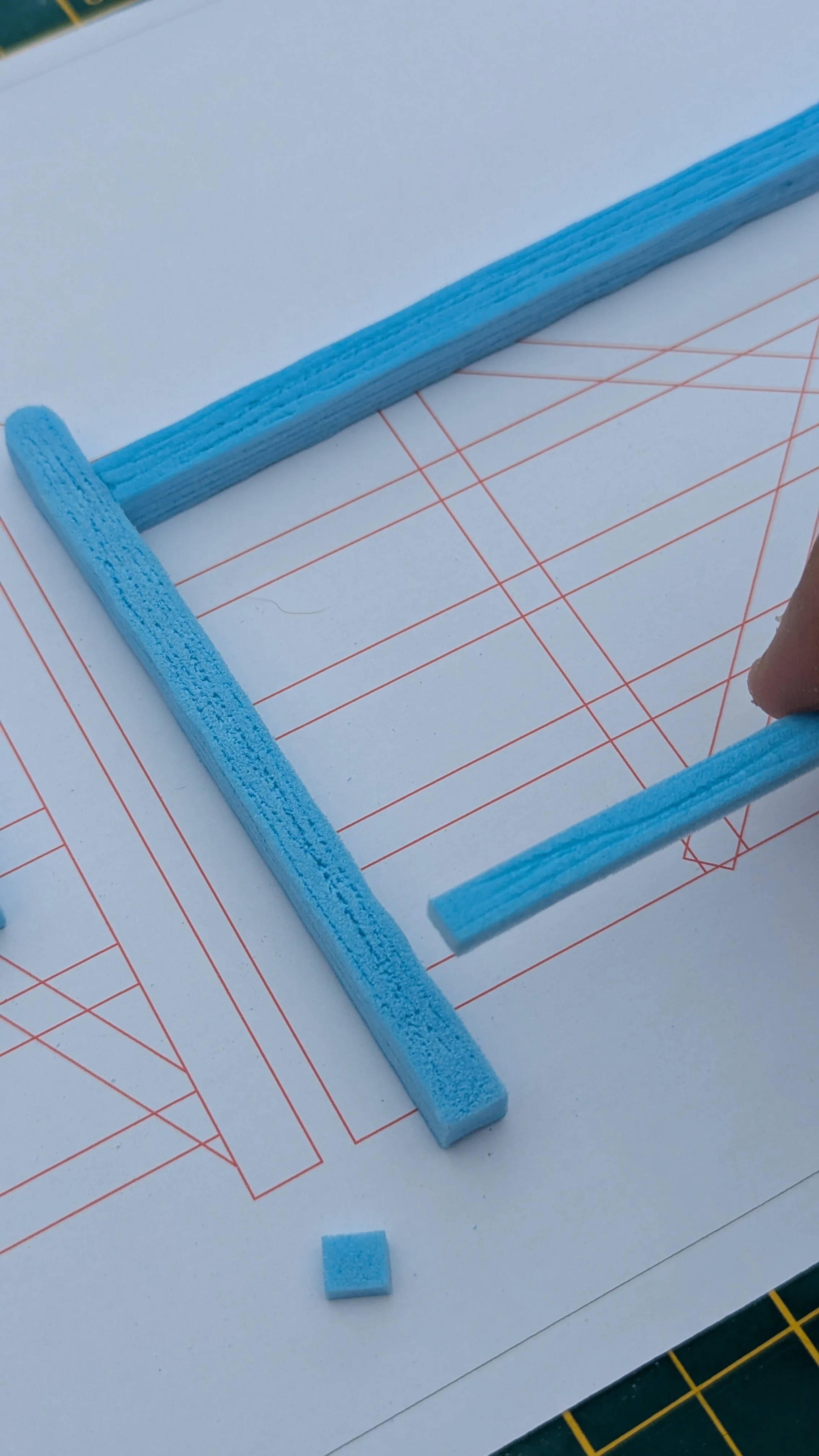
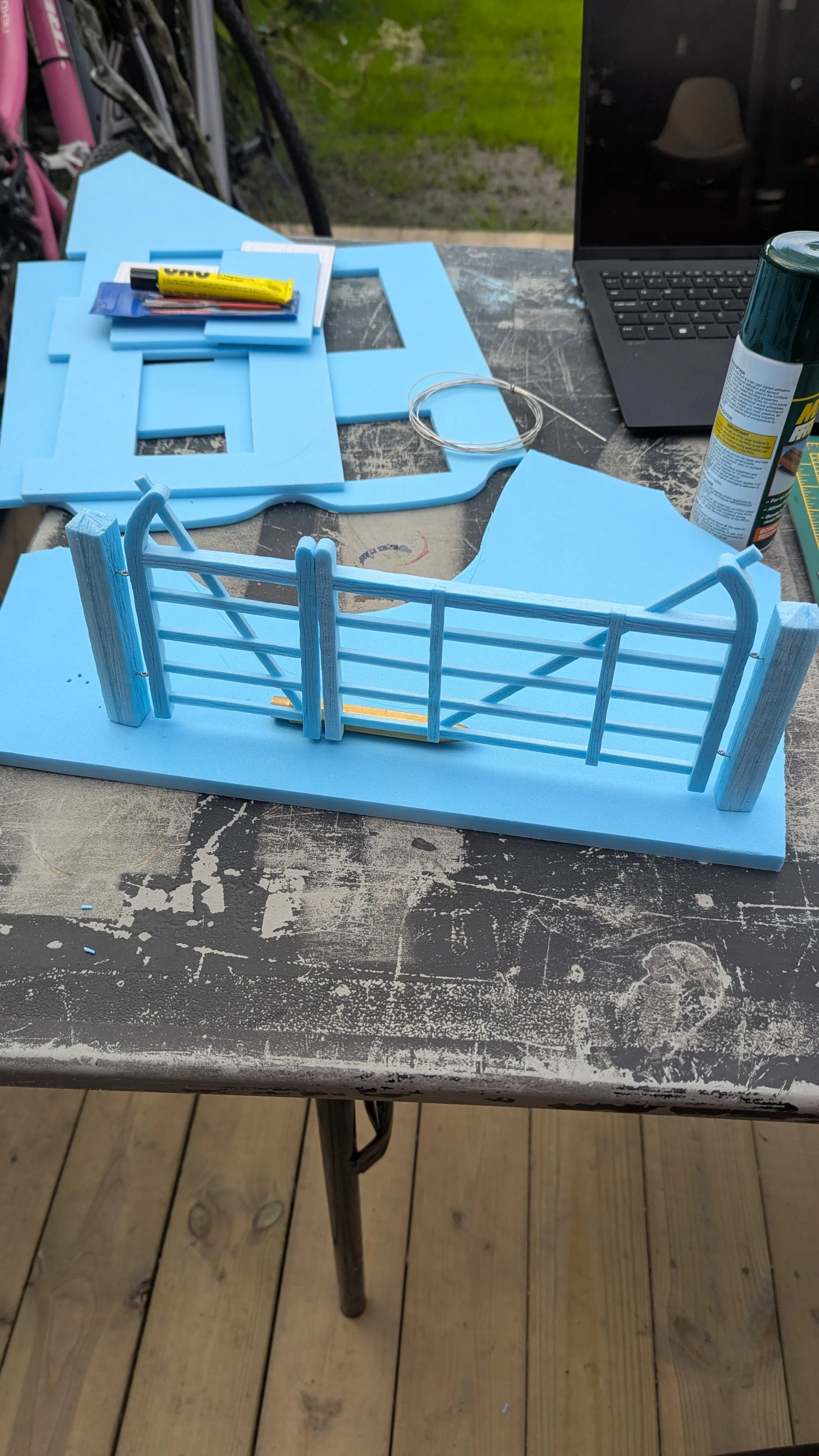
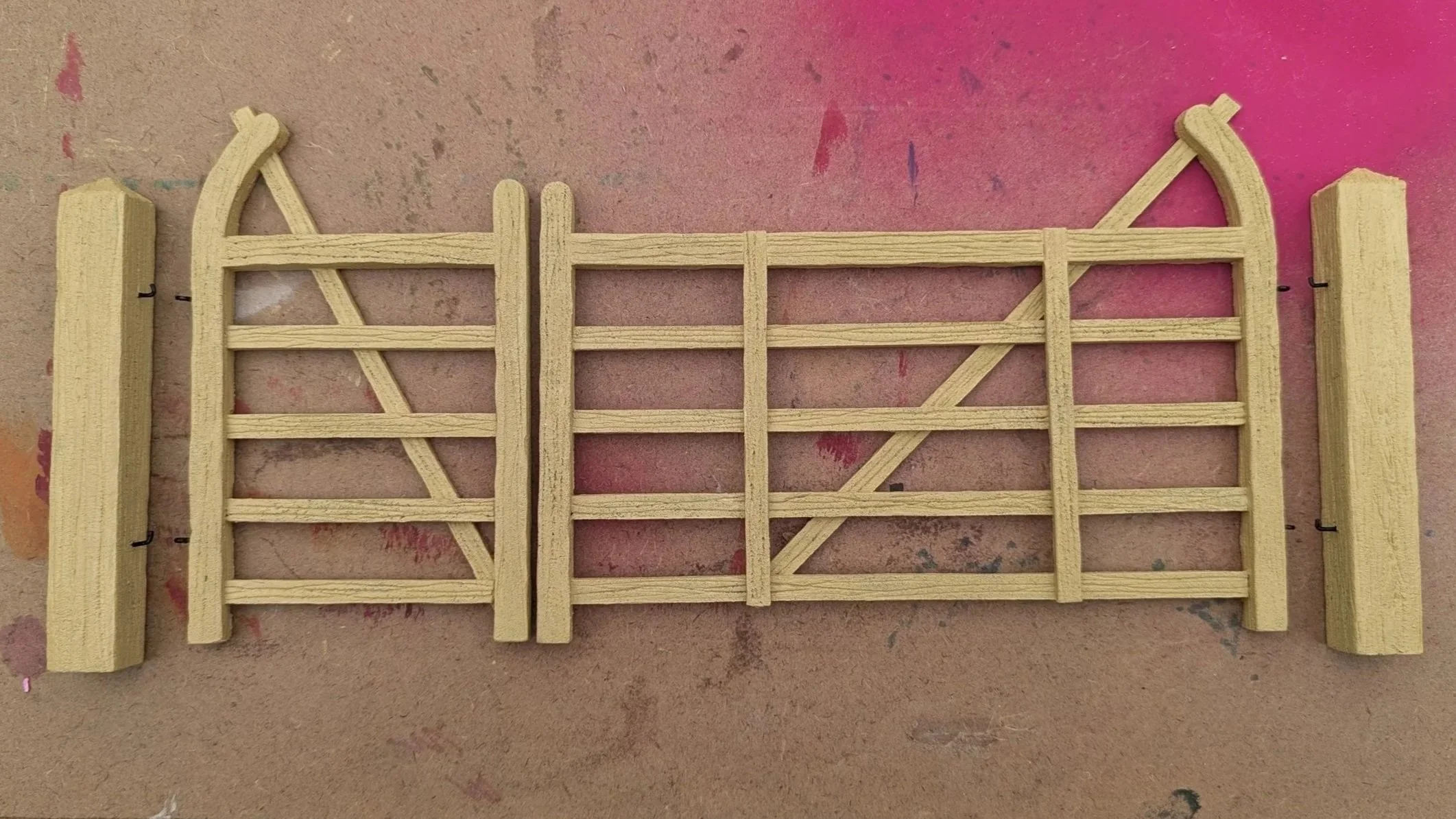
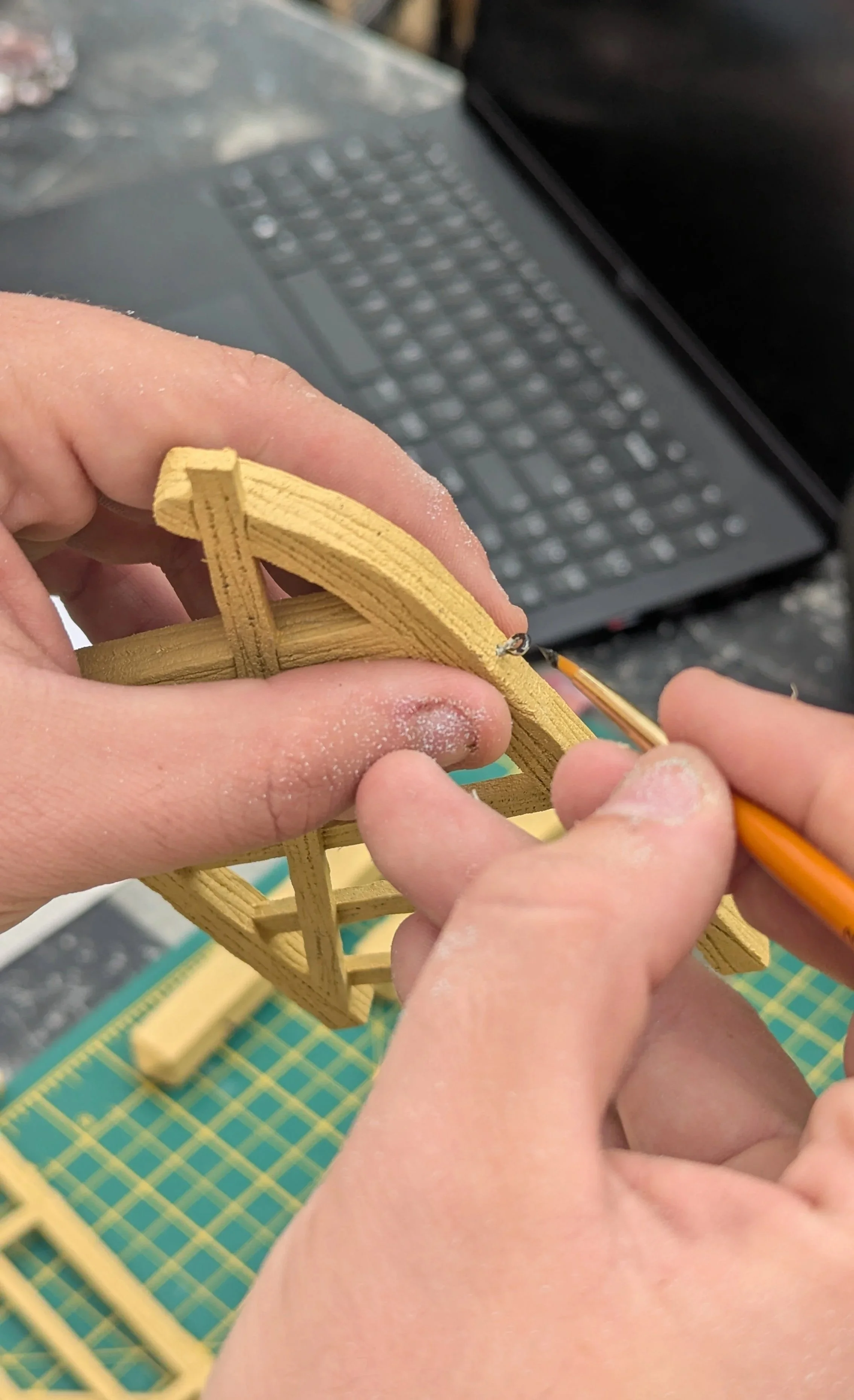
Like the chair, the gate was cut using a bespoke AutoCad template, but from XPS foam. The wood texture was carved into each element with a scalpel. Each piece of ‘wood’ was glued and followed the construction of a full scale version of the gate. The hinges have been made from bent and painted varying gauges of armature wire
Final Finish
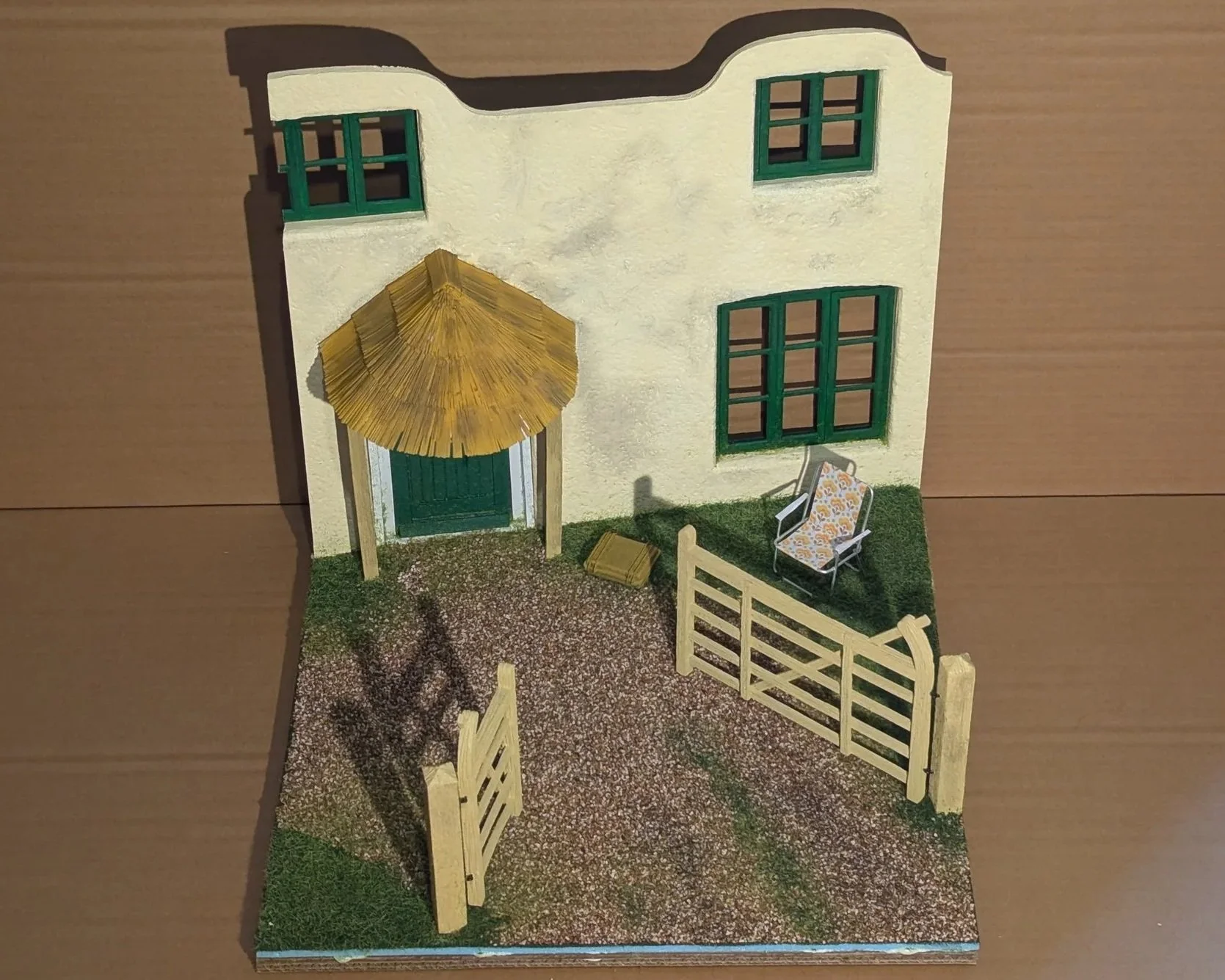
The model wan finished with various ground covers; static grass and cotswold stone imitation gravel. The whole model has also been weathered with a dark acrylic wash. (The size of the model was also altered for the practicality of transportation, storage and exhibition).